

Little Women by Louisa May Alcott is a timeless story about love, family, dreams, and growing up. Its characters face real struggles and learn important life lessons. Jo March inspires readers to follow their dreams and believe in themselves. Marmee March shares wisdom about kindness, Women Quotes patience, and gratitude. Amy, Beth, and Meg also teach us about self-worth, courage, and the beauty of family bonds. The Best Little Women Quotes capture these lessons in simple yet powerful words. They remind us that happiness comes in many forms.
Whether you love the novel or its movie adaptations, these quotes offer something special for everyone. Some will inspire you to chase your goals, while others will comfort you during hard times. The Best Little Women Quotes also celebrate sisterhood, friendship, independence, and lasting love. You can share them with friends, use them as Instagram captions, or save your favorite lines for daily inspiration. Let these memorable words remind you to live with courage, kindness, and hope.
Jo March Quotes About Dreams, Ambition, and Following Your Heart
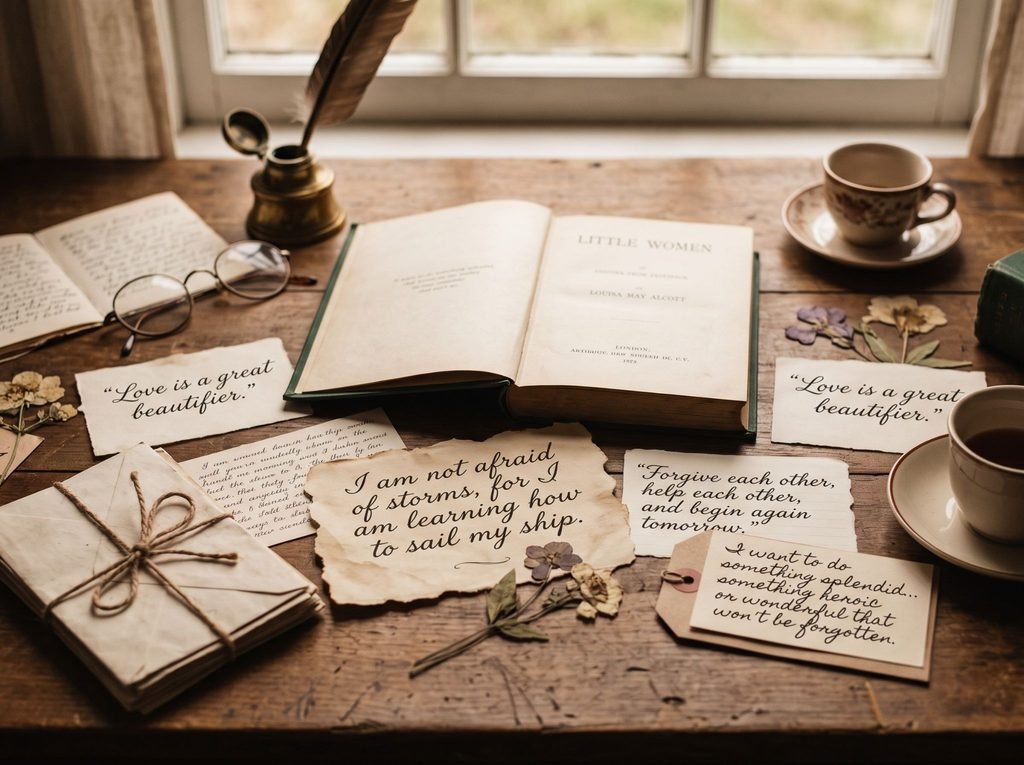
Jo March is one of the most inspiring characters in Little Women. She wants to write stories, earn her own money, and build a life that reflects her personality. Her dreams do not always fit the expectations people have for women, but she refuses to stop imagining a different future.
1. I want to do something splendid before I go into my castle — something heroic, or wonderful — that won’t be forgotten after I’m dead.
Jo dreams of making a meaningful difference. Her words encourage you to build a life around purpose rather than the desire to impress others.
2. I’ve got the key to my castle in the air, but whether I can unlock the door remains to be seen.
Dreams can feel exciting and uncertain at the same time. Jo understands that imagination opens the door, but effort is needed to discover what lies beyond it.
3. I think I shall write books, and get rich and famous; that would suit me, so that is my favorite dream.
Jo has a clear idea of what she wants. Her ambition reminds aspiring writers that it is okay to take their talents seriously and work toward a future they can call their own.
4. I want to be great, or nothing.
This line reflects Jo’s intense personality and desire to accomplish something important. It also reminds readers to balance high standards with the patience needed to grow.
5. I don’t like to doze by the fire. I like adventures, and I’m going to find some.
Jo would rather experience life than watch it pass by. Her attitude encourages you to try new things, take thoughtful risks, and welcome opportunities to learn.
6. I’ve got so many beginnings there never will be an end.
Creative people often have more ideas than time. Jo’s experience shows that starting again can be part of the process, although finishing a project matters too.
7. I like good strong words that mean something.
Jo values writing that expresses a clear thought. Her preference is a useful reminder that powerful communication depends on meaning, honesty, and careful word choice.
8. I keep turning over new leaves, and spoiling them, as I used to spoil my copybooks.
Changing your habits is rarely a perfect process. Jo’s reflection makes room for mistakes while reminding us that every fresh start offers another chance.
9. I don’t pretend to be wise, but I am observing, and I see a great deal more than you’d imagine.
Jo pays attention to people and the world around her. Her curiosity shows how observation can strengthen storytelling, deepen understanding, and inspire personal growth.
10. Aim at the highest, and never mind the money.
This line, associated with Mr. March’s advice in the novel, encourages readers to value purpose alongside financial success. It suggests that meaningful goals can give everyday effort a deeper direction.
Jo March Quotes About Independence, Identity, and Being Yourself
Jo March does not want other people to decide who she should become. She loves her family deeply, yet she also wants room to write, think, travel through her imagination, and make her own choices. That tension makes her character feel human and relatable.
These Jo March quotes about independence speak to anyone who has felt pressured to fit a role that does not feel right. Her story suggests that loving others does not require abandoning your identity.
1. Women, they have minds, and they have souls, as well as just hearts.
Jo challenges the idea that women should be valued only for beauty or romance. Her words affirm that intelligence, emotional depth, and personal ambition all deserve respect.
2. I’m so sick of people saying that love is all a woman is fit for.
Jo wants a future that includes more than marriage. This sentiment remains meaningful to readers who believe women should have the freedom to choose their own paths.
3. I’m happy as I am, and love my liberty too well to be in a hurry to give it up for any mortal man.
Jo understands that independence is an important part of her happiness. Her words remind us that a relationship should complement a person’s identity rather than erase it.
4. Don’t try to make me grow up before my time.
Growing up is a process, not a race. Jo’s response reflects the importance of allowing yourself to learn, change, and mature at a natural pace.
5. I could never love anyone as I love my sisters.
Jo’s love for her sisters is central to her identity. Her feelings show that family relationships can be a lasting source of belonging, strength, and comfort.
6. I am lonely, sometimes, but I dare say it’s good for me.
Jo recognizes that solitude can be uncomfortable without always being harmful. Time alone can help you understand your feelings and decide what you want from life.
7. I always spoil everything.
This honest thought reveals Jo’s tendency to judge herself harshly. It reminds readers that one mistake does not define a whole person or determine every future outcome.
8. I am not patient by nature.
Jo admits that patience does not come easily to her. Her struggle shows that personal growth often begins when we recognize the habits that make life more difficult.
9. You are the gull, Jo, strong and wild, fond of the storm and the wind, flying far out to sea, and happy all alone.
This description captures Jo’s adventurous spirit and independent nature. It presents freedom as something that can be beautiful, even when it means choosing a less conventional life.
10. It’s so comfortable to say all I think to you, and feel so safe and happy here.
Independence does not mean refusing emotional closeness. Jo’s words show that being yourself becomes easier when you have people who listen without making you feel judged.
Best Jo March Quotes That Inspire Women to Be Strong
Jo’s strength does not come from always knowing what to do. She gets frustrated, makes mistakes, and sometimes struggles to control her temper. What makes her inspiring is her willingness to keep trying and to learn from the people she loves.
1. I want to be great, or nothing. I want my life to mean something.
Jo’s ambition pushes her to look beyond an ordinary future. Her example encourages readers to take their goals seriously without measuring their worth only by achievement.
2. I like good strong words that mean something. Words should have a purpose.
Jo values clear and meaningful expression. Her attitude is a reminder to speak honestly and use your voice with confidence.
3. I don’t like to doze by the fire. I like adventures, and I’m going to find some.
Jo refuses to let fear make every decision for her. Her adventurous nature encourages women to try new experiences and discover their own strengths.
4. I’ve got so many beginnings there never will be an end. Every beginning gives me another chance.
Jo’s creative energy is one of her defining traits. Her story shows that mistakes need not end a dream, provided you learn and keep moving forward.
5. I am not patient by nature. I must learn to master myself.
Jo recognizes that a strong personality can sometimes become a challenge. Her struggle teaches us that emotional control is a skill we can develop over time.
6. I always spoil everything. Yet I can still try to make things right.
Jo can be hard on herself when her emotions take over. Her experience reminds us that taking responsibility matters more than remaining trapped in guilt.
7. I could never love anyone as I love my sisters. They are part of who I am.
Jo’s family gives her a deep sense of belonging. Her love for her sisters shows that independence and close family bonds can exist together.
8. I want to do something splendid before I go. I want my efforts to leave something good behind.
Jo wants her life to have meaning beyond personal comfort. Her ambition encourages readers to use their talents in ways that may benefit others.
9. I don’t pretend to be wise, but I am observing. I see more than people sometimes expect.
Jo’s ability to notice details helps her understand others. Her curiosity demonstrates that wisdom can grow through listening and paying attention.
10. Don’t try to make me grow up before my time. Let me learn as I go.
Jo values the freedom to discover her identity. Her journey reminds women that personal growth does not need to follow someone else’s timetable.
Marmee March Quotes About Love, Kindness, and Life Lessons
Marmee March is the emotional center of the March family. She guides her daughters through disappointments, arguments, financial worries, and moments of uncertainty. Instead of expecting perfection, she encourages them to recognize their weaknesses and work patiently to improve.
Marmee March quotes offer practical lessons about love, kindness, gratitude, and self-control. Her advice is especially meaningful because she admits that she also struggles with difficult emotions. She does not present goodness as something effortless; she treats it as a choice that requires daily practice.
1. Watch and pray, dear, never get tired of trying. Never think it is impossible to conquer your fault.
Marmee encourages steady effort rather than quick results. Her advice reminds readers that changing a difficult habit takes honesty, patience, and repeated practice.
2. When you feel discontented, think over your blessings, and be grateful. Remember the good things that remain in your life.
Gratitude can help you see beyond a disappointing moment. Marmee’s wisdom does not deny hardship; it encourages a wider view of life.
3. Go on with your work as usual, for work is a blessed solace. A useful task can bring comfort when your feelings are difficult to manage.
Meaningful work can give structure to an uncertain day. Marmee’s advice suggests that small responsibilities may help us regain a sense of purpose during hard times.
4. The sincere wish to be good is half the battle. The next step is to keep choosing what is right.
Good intentions matter, but they need to become actions. Marmee reminds her daughters that character develops through everyday decisions rather than promises alone.
5. Conceit spoils the finest genius. Talent becomes more valuable when it grows alongside humility.
Marmee understands that ability is not the only quality worth developing. Her words encourage talented people to remain teachable and respectful.
6. I am angry nearly every day of my life, Jo. I have learned not to let my anger rule me.
Marmee’s admission makes her advice feel honest and realistic. She shows Jo that strength is not the absence of anger but the effort to respond wisely.
7. Forgive each other, help each other, and begin again tomorrow. A mistake does not have to become the end of a relationship.
Family life includes disagreements and hurt feelings. Marmee’s guidance encourages people to repair their relationships through forgiveness and renewed effort.
8. My dear, don’t let the sun go down upon your anger. Make peace before resentment grows stronger.
Unresolved anger can turn a small disagreement into a lasting problem. This lesson encourages honest conversations and thoughtful apologies when emotions begin to settle.
9. You have had the bitter, now comes the sweet. Difficult experiences can make moments of happiness feel even more precious.
Marmee offers hope without pretending that suffering is easy. Her words remind readers that life can hold both sorrow and joy.
10. My dear girls, I am ambitious for you, but not to have you make a dash in the world. I want you to grow into women of goodness and character.
Marmee’s hopes for her daughters extend beyond status and wealth. She values compassion, integrity, and inner happiness as measures of a successful life.
Marmee March Quotes About Family, Parenting, and Wisdom
Parenting in Little Women is not about controlling every choice. Marmee guides her daughters while allowing them to develop different personalities, make mistakes, and learn from experience. She knows that Jo, Meg, Beth, and Amy need different kinds of support.
1. The love, respect, and confidence of my children was the sweetest reward I could receive. I wanted my daughters to see the kind of woman I hoped they would become.
Marmee understands that children learn from what adults do as well as what they say. Her example highlights the importance of consistency, trust, and mutual respect.
2. My Jo, you may say anything to your mother. It is my greatest happiness and pride to feel that my girls confide in me.
Emotional safety helps children share their fears and mistakes. Marmee’s relationship with Jo shows why listening without immediate judgment can strengthen family relationships.
3. Do your best, and grow as happy as we are in your success. Let your achievements bring satisfaction rather than constant worry.
Marmee encourages effort without making perfection the goal. Her advice reminds families to celebrate progress and appreciate the person behind the achievement.
4. Each do our part alone in many things, but at home we work together, always. A family becomes stronger when everyone contributes.
Household responsibilities can teach cooperation and consideration. Marmee’s outlook suggests that family life works best when support flows in both directions.
5. Don’t neglect husband for children, don’t shut him out of the nursery, but teach him how to help in it. Caring for a family is a shared responsibility.
This advice reflects the social expectations of the novel’s time, while also highlighting the importance of partnership. Its practical message is that parents should support each other rather than leave one person to carry every burden.
6. Watch and pray, dear, never get tired of trying. Small acts of patience can help children learn to manage their own faults.
Marmee does not expect change to happen overnight. Her parenting wisdom focuses on guidance, persistence, and the value of trying again after mistakes.
7. When you feel discontented, think over your blessings, and be grateful. Teach yourself to notice what is good without ignoring what needs to change.
Gratitude can help children develop perspective. Marmee’s lesson works best when appreciation is paired with honest conversations about difficult feelings.
8. Forgive each other, help each other, and begin again tomorrow. Love grows stronger when family members are willing to repair hurt.
No family avoids every conflict. Marmee shows that lasting relationships depend on accountability, kindness, and a willingness to make a fresh start.
9. The sincere wish to be good is half the battle. Encourage children to recognize their mistakes and choose a better response next time.
Marmee sees moral growth as an ongoing process. Her advice can help parents teach responsibility without making children feel that one mistake defines them.
10. My dear girls, I am ambitious for you, but not to have you make a dash in the world. I want you to value goodness as much as achievement.
Marmee hopes her daughters will become thoughtful, capable adults. Her wisdom reminds parents that success includes emotional maturity, empathy, and the ability to care for others.
Amy March Quotes About Ambition, Beauty, and Self-Worth
Amy March begins the story as a young girl who cares deeply about appearance, social position, and the things she cannot afford. As she grows older, she learns to examine her priorities and understand the difference between looking accomplished and becoming a person of real character.
1. I am not afraid of storms, for I am learning how to sail my ship.
This famous line is associated with Amy’s determination to face uncertainty. It reminds readers that courage grows through experience, not through waiting for life to become easy.
2. Talent isn’t genius, and no amount of energy can make it so. I want to be great, or nothing.
Amy understands that ambition alone does not guarantee extraordinary success. Her reflection invites readers to develop their abilities while being honest about their strengths and limitations.
3. Ambitious girls have a hard time, Laurie. Sometimes they must watch precious opportunities pass because they lack the help they need.
Amy recognizes that talent and hard work do not always create equal opportunities. Her perspective encourages us to support people who are trying to build a better future.
4. People have been very kind to me. Whenever I see girls struggling as we once did, I want to reach out and help them.
Amy remembers the support she received during difficult times. Her generosity shows how personal success can become more meaningful when it helps someone else.
5. You laugh at me when I say I want to be a lady. I mean a true gentlewoman in mind and manners.
Amy’s ambition involves more than fashion or social status. She wants to develop grace, judgment, and self-respect, showing that character matters more than appearances.
6. I want to be above the little meannesses and follies that spoil so many women. I want to grow into someone I can respect.
Amy recognizes the small behaviors that can damage relationships. Her words encourage readers to examine jealousy, vanity, and unkindness instead of allowing them to become habits.
7. It’s nice to have accomplishments and be elegant. They matter most when they reflect genuine effort rather than a desire to show off.
Amy values refinement and skill, but her growth teaches her to look beyond appearances. Her story suggests that accomplishments become more meaningful when paired with humility.
8. There is not much danger that real talent or goodness will be overlooked long. Keep developing your abilities even when recognition takes time.
Amy’s words express confidence in genuine ability. In practice, talent still needs opportunity and effort, but patience can help people stay committed to their goals.
9. The great charm of all power is modesty. Confidence is strongest when it does not need to belittle anyone else.
Amy’s reflection links strength with humility. It reminds readers that achievement and kindness can coexist.
10. I want to do something worthwhile with the gifts I have. I want my efforts to become more than a way to gain approval.
Amy’s personal growth is tied to discovering what truly matters to her. Her journey encourages readers to use their talents with purpose rather than relying entirely on other people’s opinions.
Amy March Quotes About Love, Marriage, and Personal Growth
Amy’s ideas about love change as she matures. As a younger girl, she can be vain and quick to judge, but experience teaches her to think more carefully about relationships and the kind of life she wants. Her conversations with Laurie reveal her practical side and her understanding of the choices women face.
1. You don’t need scores of suitors. You only need one, if he’s the right one.
Amy values a meaningful relationship over constant attention. Her perspective suggests that a healthy partnership depends more on compatibility and respect than on the number of people who admire you.
2. Because they are mean is no reason why I should be. I hate such things, and though I think I’ve a right to be hurt, I don’t intend to show it.
Amy refuses to let another person’s behavior decide her character. Her response reminds readers that protecting self-respect can be more satisfying than returning every insult.
3. Love Jo all your days, if you choose, but don’t let it spoil you. It is a shame to throw away so many good gifts because you cannot have the one you want.
Amy’s advice to Laurie is direct and practical. She encourages him to recognize his own potential instead of allowing unreturned love to keep him from living fully.
4. I’d rather take coffee than compliments just now. Sometimes a simple comfort is more welcome than another person’s praise.
This lighthearted sentiment reflects the everyday humor in the March family’s world. It also reminds readers that affection and compliments are not substitutes for genuine understanding.
5. Don’t laugh at the spinsters, dear girls. Tender and tragic romances may be hidden in hearts that seem quiet from the outside.
Amy’s observation challenges people to avoid judging others by their relationship status. Everyone has a story, and a person’s private life may be far more complex than it appears.
6. I think too much of my looks and hate to work. I must learn to put more effort into the things that matter.
Amy recognizes that vanity can distract her from growth. Her self-awareness shows how personal change begins with admitting where improvement is needed.
7. I want to be a gentlewoman in mind and manners. Beauty means little if kindness and good judgment are missing.
Amy’s goals become more mature as she grows older. Her outlook reminds readers that true elegance comes from conduct as much as appearance.
8. I want to become someone who can make good choices. I must learn to think beyond what pleases me in the moment.
Personal growth requires looking past immediate desires. Amy’s journey shows that maturity often involves weighing the consequences of a decision before acting.
9. I can be hurt without becoming cruel. I can protect my dignity without trying to hurt someone else.
This original reflection captures an important lesson from Amy’s character development. Emotional maturity means acknowledging pain while choosing a response that reflects your values.
10. A good marriage needs more than admiration. It needs respect, understanding, and a willingness to grow together.
Amy’s relationship story encourages readers to think about the everyday work of partnership. Long-lasting love is supported by honest communication, shared responsibility, and mutual respect.
Beth March Quotes About Kindness, Family, and a Beautiful Heart
Beth March is gentle, thoughtful, and deeply attached to her family. She does not seek fame or social recognition. Instead, she finds happiness in music, quiet companionship, and small acts of kindness. Her story also explores illness, loss, and the way love can remain powerful even when circumstances change.
1. I never wanted to go away, and the hard part now is leaving you all. I’m not afraid, but I shall miss you even in heaven.
Beth’s words express her deep attachment to her family. They capture the sadness of separation and the comfort that comes from knowing you have been loved.
2. Don’t mind me. I’m as happy as a cricket here.
Beth often finds contentment in simple surroundings. Her quiet happiness reminds readers that joy does not always depend on wealth, excitement, or public recognition.
3. Dear little girl! She’s so ambitious, but her heart is good and tender. No matter how high she flies, she will never forget home.
This affectionate description connects ambition with family loyalty. It suggests that pursuing personal dreams does not mean abandoning the people who helped shape you.
4. I hope I shall see her again.
These simple words express longing and emotional connection. Beth’s story reminds readers that even a brief sentence can carry deep feelings when a relationship matters.
5. There are many Beths in the world, shy and quiet, sitting in corners till needed. They live for others so cheerfully that their sacrifices may go unnoticed.
Beth represents people whose contributions are easy to overlook. Her character encourages us to recognize quiet effort and appreciate those who care for others without asking for praise.
6. The sweet, sunshiny presence vanishes, leaving silence and shadow behind.
This image conveys the emptiness that follows a beloved person’s absence. It reflects how deeply a gentle presence can shape the atmosphere of a home.
7. She recognized the beauty of her sister’s life, uneventful and unambitious, yet full of genuine virtues.
Beth’s life challenges the idea that achievement must be public or impressive. Her goodness lies in the love she gives and the steady way she supports the people around her.
8. I wish I could send my bunch to Father. I’m afraid he isn’t having such a merry Christmas as we are.
Beth thinks of someone else even while enjoying a happy moment. Her concern shows the kind of compassion that notices another person’s loneliness and wants to offer comfort.
9. Perhaps it was because she was so grateful for this blessing that a greater one was given her.
Gratitude is a recurring theme in Beth’s story. This reflection invites readers to appreciate what they have while remaining open to unexpected moments of joy.
10. A quiet act of love can mean more than a grand display. The care we give each other often becomes the memory that lasts.
This original reflection captures Beth’s gentle influence on her family. Her story reminds us that kindness does not need an audience to matter.
Meg March Quotes About Love, Marriage, and Family Life
Meg March is the eldest sister, and her story focuses on responsibility, romance, financial limitations, and the desire to build a loving home. She sometimes wishes for fashionable clothes and the comforts that wealth can provide. Over time, she learns that appearances do not guarantee happiness.
1. I don’t want a fashionable wedding, but only those about me whom I love. I want to look like myself among the people who know me best.
Meg values personal connection over social display. Her preference suggests that important celebrations feel more meaningful when they reflect the people and relationships at their center.
2. I don’t believe fine young ladies enjoy themselves a bit more than we do. Happiness is not reserved for people with money or status.
Meg occasionally sees the contrast between her life and the lives of wealthier girls. Her observation reminds readers that financial comfort does not automatically create genuine joy.
3. I declare, it really seems like being a fine young lady to come home from the party in a carriage. The experience makes me understand why elegant things can be tempting.
Meg is honest about her attraction to luxury. Her character shows that wanting beautiful things is human, but those desires need to be balanced with more lasting values.
4. I won’t fret, but it does seem as if the more one gets, the more one wants. Sometimes having more only creates new expectations.
Meg recognizes how easily comparison can turn satisfaction into dissatisfaction. Her words encourage readers to enjoy what they have without constantly measuring it against someone else’s life.
5. We can’t do much, but we can make our little sacrifices. We ought to make them gladly when they help the people we love.
Meg’s family often has to make practical choices with limited resources. Her experience highlights the importance of generosity while reminding readers that sacrifice is most meaningful when it comes from care rather than pressure.
6. I think too much of my looks and hate to work. I must learn to become more useful and less concerned with appearances.
Meg’s self-reflection reveals her desire to mature. Her journey suggests that lasting confidence grows from developing character, skills, and responsibility.
7. Margaret had a sweet and pious nature, which unconsciously influenced her sisters. Her example helped shape the atmosphere of the family.
Meg often takes on a responsible role as the eldest sister. Her influence shows how everyday behavior can guide others without formal lessons or instructions.
8. I don’t need a grand home to feel rich in love. A peaceful household can be a treasure in its own right.
This original reflection captures Meg’s growing appreciation for domestic happiness. It emphasizes that the value of a home comes from the relationships within it, not simply its size or decoration.
9. A happy marriage is built through daily care. Love becomes stronger when two people face ordinary responsibilities together.
Meg’s married life shows that romance is only one part of a lasting relationship. Shared work, patience, and realistic expectations matter just as much.
10. I want my family to feel loved and secure. The simplest days can become precious memories when we spend them with care.
Meg’s story places value on the routines that hold family life together. Her character reminds readers that ordinary moments can create a deep and lasting sense of belonging.
Laurie Quotes About Friendship, Love, and Growing Up
Theodore Laurence, known as Laurie, brings humor and youthful energy into the March sisters’ lives. He becomes especially close to Jo, and their friendship is one of the most memorable relationships in the novel. Their story explores the difference between loving someone as a friend and being suited to them as a romantic partner.
1. Jo’s eyes sparkled, for it is always pleasant to be believed in. A friend’s praise can feel more meaningful than praise from a crowd.
This narration captures the encouragement Jo receives from Laurie. It reminds readers that genuine support can strengthen confidence more than public recognition.
2. All sorts of pleasant things happened about that time, for the new friendship flourished like grass in spring. Their companionship brought fresh energy into their lives.
The image of spring suggests growth and possibility. Jo and Laurie’s friendship shows how shared interests and everyday conversations can create a strong bond.
3. Those are people whom it is a satisfaction to help. If they have genius, it is an honor to be allowed to serve them.
This sentiment values generosity toward talented people. It also reflects the idea that supporting someone else’s ambitions can be rewarding in itself.
4. If they haven’t, it is a pleasure to comfort them. Kindness matters even when someone does not achieve the success they imagined.
The thought offers a gentle reminder that people deserve compassion regardless of their accomplishments. Friendship should provide support rather than become a contest over who is more successful.
5. I saw talented young fellows making all sorts of sacrifices. They endured real hardships because they hoped to realize their dreams.
This reflection connects ambition with persistence. It reminds readers that pursuing a goal often requires effort, patience, and a willingness to face setbacks.
6. Love is a great beautifier. Caring deeply about someone can change the way we see the world around us.
This familiar line expresses the warmth associated with affection. It suggests that love can bring out tenderness and appreciation that might otherwise remain hidden.
7. Be worthy of love, and love will come. Build a life guided by kindness and self-respect rather than chasing approval.
The line is often shared as a romantic sentiment. Its deeper message is that a healthy relationship begins with the qualities we bring to it, not merely with the attention we receive.
8. Love casts out fear, and gratitude can conquer pride. Trust and appreciation can help people move beyond defensive habits.
The thought connects emotional courage with humility. It reminds readers that strong relationships need honesty, reassurance, and a willingness to admit when we are wrong.
9. Hearts, like flowers, cannot be rudely handled. They must open naturally, with time and care.
This image presents love as something that cannot be forced. It encourages patience and respect for another person’s feelings, boundaries, and choices.
10. Jo and Laurie shared a friendship full of laughter and understanding. Their story shows that a close bond can remain valuable even when romance takes a different path.
Their relationship is memorable because it is not defined by a single outcome. It illustrates how people can care deeply for each other and still need different things from life.
Best Little Women Quotes About Sisterhood and Family Bonds
The bond between the March sisters is at the heart of Little Women. Jo, Meg, Beth, and Amy have different personalities, interests, and ambitions. They argue and misunderstand one another, but their love continues to bring them back together.
1. I could never love anyone as I love my sisters. My family will always hold a special place in my heart.
Jo’s devotion reflects the emotional center of the story. Her words remind readers that siblings can offer a unique kind of companionship built through shared memories.
2. Do your best, and grow as happy as we are in your success. Celebrate each other’s achievements instead of treating life as a competition.
Marmee’s advice encourages support within the family. It shows that happiness can grow when relatives take pride in one another’s progress.
3. Forgive each other, help each other, and begin again tomorrow. A loving family makes space for mistakes and fresh starts.
The March sisters are not perfect, and their disagreements make them believable. Their story shows that relationships grow stronger when people take responsibility and make an effort to repair hurt.
4. We can make our little sacrifices and ought to do so gladly. Small acts of care can make daily family life more peaceful.
The sisters learn that love often appears through practical help. Whether sharing a responsibility or comforting someone, small efforts can make a meaningful difference.
5. The girls gave their hearts into their mother’s keeping and their souls into their father’s. Their parents helped create a foundation of trust and belonging.
This image highlights the family’s emotional closeness. It shows how a supportive home can shape the values children carry into adulthood.
6. A sister can challenge you and still stand beside you. Love does not disappear simply because two people disagree.
The March sisters often test one another’s patience. Their experiences remind readers that honest differences need not destroy a relationship.
7. Family memories can bring comfort long after childhood has passed. Shared experiences help connect the people we were with the people we become.
The novel follows the sisters through changing stages of life. Their memories give them a sense of continuity even when their circumstances change.
8. We do not need to live identical lives to remain close. We only need to respect the dreams that make each of us different.
Each sister follows her own path. Their differences show that strong family bonds can survive when people allow one another room to grow.
9. Kindness at home can become a habit we carry into the world. The way we treat our family often teaches us how to care for others.
The March household values generosity and mutual support. Its example shows how ordinary acts of consideration can influence relationships beyond the home.
10. The greatest family treasures are often the moments we share. A simple conversation or a quiet evening can become a memory we cherish for years.
The novel gives importance to everyday experiences as well as dramatic events. It reminds readers to appreciate the ordinary moments that make family life meaningful.
Little Women Quotes About Love That Never Fades
Love in Little Women takes many forms. It appears in family loyalty, romantic relationships, friendship, sacrifice, and the care people show when life becomes difficult. Louisa May Alcott presents love as something that develops through ordinary choices rather than grand promises alone.
1. Love is a great beautifier. It can make ordinary moments feel extraordinary.
Love often changes the way we notice the world. When we care for someone, small gestures can become meaningful memories.
2. Be worthy of love, and love will come. Let kindness and self-respect guide the way you treat yourself and others.
This sentiment encourages people to build healthy relationships from a place of confidence. It also reminds us that love should not require abandoning our values.
3. Love casts out fear, and gratitude can conquer pride. Trust grows when people feel safe enough to be honest.
Relationships become stronger when affection is paired with appreciation. Gratitude helps people recognize the care they receive instead of focusing only on what is missing.
4. Hearts, like flowers, cannot be rudely handled. They open naturally when they receive patience and care.
The comparison offers a gentle lesson about emotional boundaries. Love cannot be forced, and genuine connection needs time to develop.
5. I could never love anyone as I love my sisters. The bond we share is part of what makes life feel like home.
Jo’s devotion shows how family love can remain important through changing circumstances. Her feelings reflect the comfort of being understood by people who have known you for years.
6. To be loved and chosen by a good man is the best and sweetest thing which can happen to a woman.
This sentiment reflects the romantic expectations expressed in the novel’s historical setting. Modern readers may also consider how important it is for both partners to feel valued and free to make their own choices.
7. Rich or poor, we will keep together and be happy in one another. Love can provide comfort even when life does not offer every material advantage.
The March family’s financial struggles make this idea especially meaningful. Their story suggests that wealth alone cannot replace trust, companionship, and shared purpose.
8. A lasting relationship needs more than beautiful words. It needs everyday acts of care, honesty, and understanding.
This original reflection captures the novel’s focus on character and responsibility. Affection becomes more reliable when people show it through their actions.
9. Some of the deepest love is shown quietly. It appears in a helping hand, a thoughtful question, or the willingness to stay beside someone.
Beth’s character makes this message especially powerful. Her gentle nature shows that love does not need to attract attention to make a difference.
10. Love does not mean that life will always be easy. It means having someone with whom you can face change, disappointment, and hope.
The March family experiences both happiness and sorrow. Their story shows how meaningful relationships can offer strength during life’s uncertain seasons.
Little Women Quotes About Life, Happiness, and Personal Growth
One reason Little Women remains meaningful is that its characters do not grow in a straight line. They make mistakes, question their choices, and learn through the consequences of their actions. Their experiences reflect the complicated process of becoming an adult.
1. Have regular hours for work and play; make each day both useful and pleasant. A balanced routine can help you care for your responsibilities without forgetting to enjoy life.
This advice emphasizes the value of structure. It reminds readers that productivity and happiness do not have to compete with each other.
2. The humblest tasks get beautified if loving hands do them. Even ordinary work can become meaningful when it is done with care.
Daily responsibilities may seem unimportant at first. Yet the attitude we bring to them can turn small tasks into expressions of love and service.
3. Our burdens are here, our road is before us, and the longing for goodness and happiness guides us through many troubles. Difficulties may be unavoidable, but our values can help us decide how to face them.
This sentiment reflects the novel’s moral outlook. It encourages readers to keep moving toward meaningful goals even when progress feels slow.
4. Some people seemed to get all sunshine, and some all shadow. Life can look very different depending on the circumstances each person faces.
The contrast captures the unequal distribution of happiness and hardship. It reminds us to show compassion rather than assume we understand another person’s experience.
5. Into each life some rain must fall, some days must be dark and sad and dreary. Painful seasons are part of being human, even when they feel endless.
This well-known line acknowledges that no one escapes every disappointment. It offers comfort by reminding readers that sadness is a part of life, not the whole of it.
6. Be comforted, dear soul; there is always light behind the clouds. Hope can remain even when you cannot see a clear way forward.
The image of light beyond clouds offers reassurance during difficult times. It encourages patience without pretending that every problem will disappear immediately.
7. Take some books and read; that is an immense help. The right book can offer companionship when you feel alone.
Reading is one of the recurring comforts in Little Women. Books can introduce new perspectives, give language to difficult feelings, and make a quiet afternoon feel less lonely.
8. The worth of time becomes clear when we use it well. Small choices today can shape the opportunities we have tomorrow.
Time is easy to take for granted when life feels familiar. This lesson encourages readers to spend it on relationships, learning, and work that matters.
9. Youth will bring fewer regrets when each day is used with care. You do not need a perfect plan, but you can make thoughtful choices.
Personal growth often depends on small, repeated actions. This reflection encourages readers to live intentionally rather than wait for the ideal moment to begin.
10. A love that grows with our growth can bind people together through the sweetest ties of life. The relationships we nurture can remain meaningful as we change.
The March family’s story connects happiness with belonging. It suggests that a fulfilling life includes not only personal achievement but also the people who share our journey.
Little Women Quotes About Dreams and Never Giving Up
Dreams are central to the March sisters’ lives. Jo wants to become a writer, Amy hopes to develop her artistic abilities, and Meg imagines a comfortable home. Their ambitions differ, but each sister must decide what she is willing to work for and what she may need to change.
1. I think I shall write books, and get rich and famous. That would suit me, so it is my favorite dream.
Jo speaks openly about her ambitions. Her confidence encourages aspiring writers to take their goals seriously and give their talents room to develop.
2. I’ve got the key to my castle in the air. Whether I can unlock the door remains to be seen.
A dream can offer direction before you know exactly how to reach it. Jo’s words capture the excitement and uncertainty that accompany a new ambition.
3. I want to do something splendid before I go. I want to create something that matters beyond the present moment.
Jo wants her work to leave a lasting mark. Her determination invites readers to think about the contribution they hope to make through their own abilities.
4. Aim at the highest, and never mind the money. Let meaningful goals guide your efforts instead of making wealth your only measure of success.
This advice from Mr. March places purpose above material gain. It reminds readers that ambition can be driven by creativity, service, and personal values as well as income.
5. I’ve got so many beginnings there never will be an end. Every new attempt can teach you something the previous one could not.
Jo’s many ideas reveal her creative energy. Her experience reminds us that persistence works best when we also learn to complete projects and build on what we have already started.
6. I am not afraid of storms, for I am learning how to sail my ship. I can grow stronger by facing challenges one step at a time.
The storm image connects courage with learning. It suggests that confidence develops as we gain experience handling uncertainty.
7. Ambitious girls have a hard time when opportunities are limited. Their talent deserves support, encouragement, and a fair chance to grow.
Amy’s perspective draws attention to the barriers that ambitious women can face. Her story reminds readers that perseverance matters, but access to opportunities matters too.
8. There is not much danger that real talent or goodness will be overlooked long. Keep developing your abilities even when recognition comes slowly.
The sentiment encourages patience and consistent effort. Although recognition is never guaranteed, continuing to learn can help you become more capable and confident.
9. A failed attempt does not erase the dream that inspired it. It can show you what needs to change before you try again.
This original reflection captures one of the novel’s enduring life lessons. Failure can provide useful information when you treat it as an opportunity to learn rather than a final judgment.
10. Dreams need more than hope to become real. They need effort, time, courage, and the willingness to keep going when progress is difficult.
The March sisters each learn that ambition comes with responsibilities. Their experiences show that meaningful goals are pursued through daily decisions, not wishful thinking alone.
Little Women Quotes About Courage, Strength, and Independence
Courage in Little Women is not limited to dramatic acts of bravery. It appears when Jo challenges expectations, Amy faces disappointment, Meg makes difficult choices, and Beth continues to show kindness during hardship. Each sister demonstrates a different kind of strength.
1. I am not afraid of storms, for I am learning how to sail my ship. I do not need to know everything before I begin.
The familiar line connects courage with experience. It encourages readers to develop confidence through action rather than waiting until every uncertainty disappears.
2. Women have minds and souls as well as hearts. They have ambition and talent, not only beauty.
Jo’s perspective challenges narrow expectations for women. Her words affirm the importance of intellectual freedom, creativity, and personal choice.
3. I want to be great, or nothing. I want to discover what I can achieve through honest effort.
Jo’s ambition shows her desire to take her abilities seriously. Her determination is inspiring, although her journey also reminds readers to allow themselves room to make mistakes.
4. I am not patient by nature. I must learn to control my temper instead of letting it control me.
Jo’s honesty makes her character relatable. Her struggle demonstrates that emotional strength often involves managing our reactions rather than pretending we never feel anger.
5. Because they are mean is no reason why I should be. I can choose my own behavior even when others treat me unfairly.
Amy’s response offers a lesson in self-respect. It reminds readers that another person’s cruelty does not have to determine the kind of person they become.
6. I always spoil everything. Yet I can acknowledge my mistakes and make a better choice next time.
Jo’s self-criticism reveals her vulnerability. Her story shows that resilience requires both accountability and the ability to forgive yourself.
7. I want to be above the little meannesses and follies that spoil so many women. I want to grow in character as well as ability.
Amy’s ambition gradually becomes more thoughtful. Her words encourage readers to develop kindness and integrity alongside outward success.
8. I am lonely, sometimes, but I dare say it is good for me. Solitude can teach me things I might miss in a crowd.
Jo recognizes that independence can have an emotional cost. Her experience suggests that time alone can help us understand ourselves more clearly.
9. I want to do something splendid before I go. I want to make good use of the abilities I have been given.
Jo’s ambition reflects her desire for a meaningful life. Her example encourages readers to turn their talents into purposeful action.
10. Courage does not mean never feeling afraid. It means continuing to make thoughtful choices when fear is part of the experience.
This original reflection captures the resilience shown by the March sisters. Their stories remind us that strength is often quiet, personal, and built over time.
Little Women Quotes About Friendship and Lasting Relationships
Friendship gives the March sisters joy, support, and opportunities to understand people outside their family. Jo and Laurie share laughter and common interests, while the sisters learn to care for people whose lives differ from their own. Their relationships are not always simple, but they grow through shared experiences.
1. Jo’s eyes sparkled, for it is always pleasant to be believed in. A friend’s encouragement can make a difficult goal feel possible.
This observation captures the value of Laurie’s support. It reminds readers that believing in someone’s abilities can help them find confidence during uncertain moments.
2. All sorts of pleasant things happened about that time, for the new friendship flourished like grass in spring. Their connection brought excitement and fresh possibilities into everyday life.
The spring image suggests that friendship can help people grow. It reflects how shared interests and open conversation can turn unfamiliar people into trusted companions.
3. Those are people whom it is a satisfaction to help. Supporting someone else’s progress can bring its own kind of happiness.
The sentiment highlights the generosity that makes friendship meaningful. It encourages readers to celebrate the success of others rather than view every achievement as a competition.
4. If they haven’t, it is a pleasure to comfort the poor souls. A good friend offers kindness even when someone is struggling or disappointed.
This idea emphasizes compassion over judgment. It reminds us that friendship matters most when people need understanding rather than criticism.
5. Hearts, like flowers, cannot be rudely handled. Trust grows when people treat each other’s feelings with patience.
This image offers a gentle lesson about emotional boundaries. Lasting relationships need respect, especially when people have different expectations or experiences.
6. Be worthy of love, and love will come. Let your friendships grow from honesty rather than a need to impress.
Genuine connection becomes easier when people can be themselves. The sentiment encourages readers to value authenticity over popularity.
7. I could never love anyone as I love my sisters. Family and friendship can both give us a sense of being understood.
Jo’s words show the importance of deep emotional bonds. They also remind us that meaningful relationships can take different forms.
8. A friend can tell you the truth without making you feel small. Honest advice is most helpful when it comes with respect.
This original reflection captures a healthy approach to friendship. It encourages people to combine honesty with compassion rather than using truth as an excuse for cruelty.
9. A good friendship leaves room for different dreams. Caring about someone does not mean asking them to make all the same choices you would make.
Jo and Laurie’s relationship demonstrates the importance of respecting individuality. Their story shows that affection can remain meaningful even when two people want different futures.
10. Lasting friendships are built through small moments of care. A thoughtful conversation or a helping hand can matter long after the day has passed.
The novel values everyday kindness as much as dramatic events. Its relationships remind readers that trust grows through consistent actions over time.
Little Women Quotes About Growing Up and Finding Yourself
Growing up is one of the central themes of Little Women. The March sisters begin with different ideas about what happiness means, and their experiences gradually reshape those ideas. They discover that adulthood brings freedom, but it also brings responsibilities and difficult decisions.
1. Don’t try to make me grow up before my time. I need room to learn from experience and discover who I am.
Jo’s resistance to being rushed reflects her independent nature. Her words remind readers that maturity develops through experience rather than pressure alone.
2. I keep turning over new leaves, and spoiling them, as I used to spoil my copybooks. I keep trying to improve, even when my progress is imperfect.
Jo’s metaphor describes the repeated effort involved in changing habits. It shows that personal growth often includes setbacks and fresh beginnings.
3. I am not patient by nature. I must learn to respond more thoughtfully when life frustrates me.
Jo’s honesty helps readers recognize their own weaknesses without giving up. Growth begins when we become willing to work on the habits that hold us back.
4. I want to be a lady in mind and manners. I want my character to grow along with my abilities.
Amy’s ambition develops beyond outward appearance. Her journey suggests that becoming an adult includes learning how to treat others with dignity and respect.
5. I won’t fret, but it does seem as if the more one gets, the more one wants. I must learn to recognize when enough is enough.
Meg’s observation explores the pull of comparison and material desire. Her story reminds readers that satisfaction depends partly on appreciating what they already have.
6. I am lonely, sometimes, but I dare say it is good for me. Time alone can help me understand what I truly want.
Jo’s experience shows that solitude can support self-discovery. It can offer space to reflect on relationships, ambitions, and personal priorities.
7. I want to do something splendid before I go. I want my choices to reflect the kind of person I hope to become.
Jo’s ambition is connected to her sense of identity. Her desire for meaningful work encourages readers to think about what they want their lives to stand for.
8. The great charm of all power is modesty. Confidence becomes more meaningful when it is balanced by humility.
Amy’s reflection connects maturity with self-awareness. It reminds readers that growing in ability should not mean becoming dismissive of others.
9. A life can change without losing its meaning. We can carry our values into new roles and unfamiliar circumstances.
The March sisters face changing responsibilities as they grow older. Their experiences suggest that personal identity can evolve while remaining connected to the lessons of the past.
10. You do not have to become someone else to grow. You can learn from your mistakes while keeping the qualities that make you yourself.
This original reflection captures the balance between change and authenticity. Finding yourself means understanding both what needs improvement and what deserves to be protected.
Little Women Quotes About Family, Home, and Belonging
For the March sisters, home is more than a building. It is the place where they share meals, tell stories, care for one another, and return after disappointment. Although their family has limited money, their household is rich in affection and shared traditions.
1. I could never love anyone as I love my sisters. They are part of the home I carry with me.
Jo’s attachment to her sisters expresses the comfort of belonging. Family relationships can remain a source of strength even when life takes people in different directions.
2. I wish I could send my bunch to Father. I am afraid he isn’t having such a merry Christmas as we are.
Beth thinks about her father while enjoying a family celebration. Her concern shows how love can make us remember people who are absent from an otherwise happy moment.
3. Rich or poor, we will keep together and be happy in one another. Our closeness matters more than the things we cannot afford.
The March family faces financial limitations without giving up its sense of connection. Their story reminds readers that material comfort and emotional richness are not the same thing.
4. The girls gave their hearts into their mother’s keeping and their souls into their father’s. Their parents helped create a home where affection and guidance could grow.
This image emphasizes the family’s deep trust. It shows how a caring environment can influence the values children carry into later life.
5. Each do our part alone in many things, but at home we work together, always. A household becomes more peaceful when everyone contributes.
Family life requires cooperation as well as affection. This sentiment encourages shared responsibility instead of expecting one person to do everything.
6. I don’t want a fashionable wedding, but only those about me whom I love. The people who share the moment matter more than the appearance of the celebration.
Meg’s preference reflects her desire for an intimate and meaningful occasion. Her attitude reminds readers that important milestones do not need to follow every social expectation.
7. Don’t neglect one another in the rush of daily responsibilities. Make time to listen and show that your family matters.
The novel repeatedly places importance on care within the home. This original reflection encourages families to protect their relationships even when schedules become busy.
8. A peaceful home can offer comfort that money cannot buy. Kindness and understanding help make ordinary rooms feel welcoming.
The March family’s circumstances illustrate this idea. Their home becomes meaningful because of the affection and shared experiences inside it.
9. Family members may have different ambitions and personalities. Belonging means making space for those differences without withdrawing love.
Jo, Meg, Beth, and Amy do not always agree. Their story shows that family closeness can survive individuality when people practice respect and understanding.
10. Home is where small memories become part of a shared history. The simplest traditions can bring comfort long after circumstances change.
The novel’s domestic scenes help make its characters memorable. They remind readers that a sense of belonging is often built from moments that seem ordinary at the time.
Little Women Quotes About Women, Freedom, and Equality
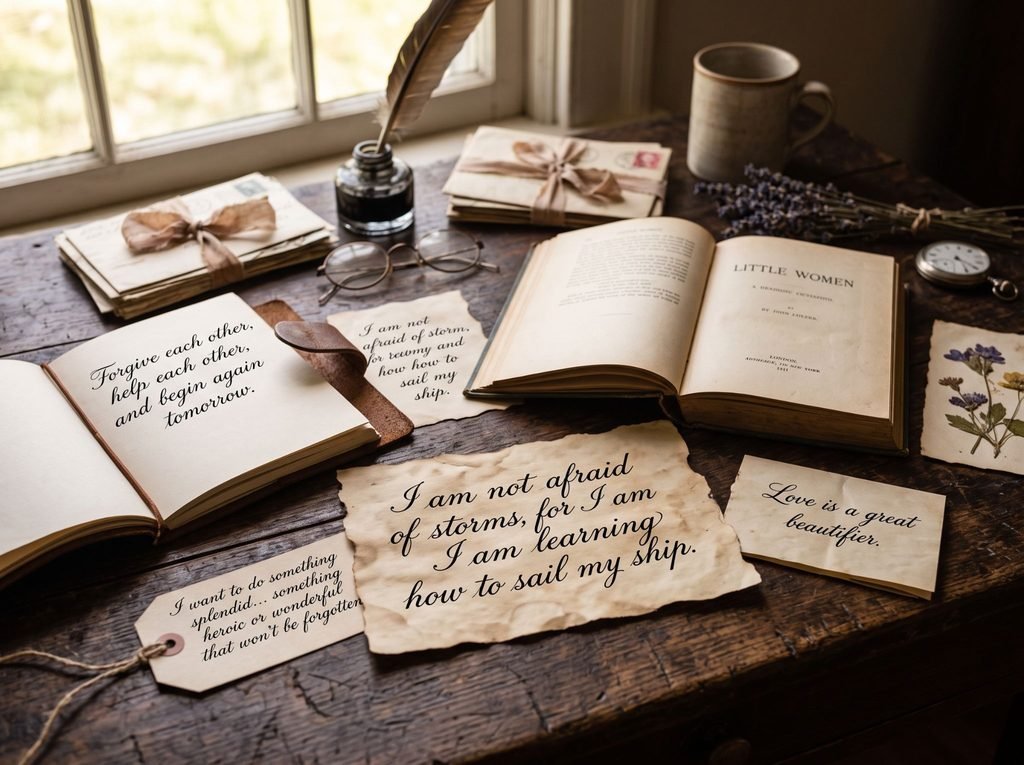
Jo March’s resistance to traditional expectations is one of the reasons modern readers continue to connect with her. She wants to write, earn money, and decide what kind of life suits her. Her ambitions challenge the limited choices available to women in the world of the novel.
1. Women have minds and souls as well as hearts. They have ambition and talent, not only beauty.
Jo challenges the belief that a woman’s future should be defined by romance. Her words affirm that intelligence, creativity, and independent goals deserve recognition.
2. I’m so sick of people saying that love is all a woman is fit for. A woman’s life can hold many ambitions beyond marriage.
Jo wants room to pursue her interests. Her frustration reflects the struggle to have personal goals taken seriously in a society with narrow expectations.
3. I’m happy as I am, and love my liberty too well to be in a hurry to give it up for any mortal man. I want the freedom to make choices that reflect my own values.
Jo understands that independence is part of her happiness. Her perspective reminds readers that relationships should allow both partners to maintain their individuality.
4. I want to write books and make something of my talent. I want my work to be judged on its value rather than on whether I fit an expected role.
Jo’s literary ambition is central to her identity. Her story encourages women to take their creative abilities seriously and seek opportunities to develop them.
5. Ambitious girls have a hard time when they lack help at the right moment. Talent deserves encouragement and a fair opportunity to grow.
Amy recognizes that determination alone cannot remove every barrier. Her perspective highlights the importance of support, access, and equal opportunity.
6. I want to be a lady in mind and manners. I want respect to come from my character, not merely my appearance.
Amy’s goal becomes more thoughtful as she matures. Her story suggests that dignity and self-respect are built through conduct and personal values.
7. A woman should have room to discover her own strengths. She should not have to choose her future simply to satisfy other people’s expectations.
This original reflection builds on the novel’s themes of independence. It encourages readers to value the freedom to develop talents and make informed choices.
8. Education and creativity can open doors. Women deserve opportunities to learn, practice their skills, and contribute their ideas.
Jo’s love of books and writing reflects the power of intellectual independence. Her ambitions remind readers that personal growth becomes easier when learning is encouraged.
9. Independence does not require rejecting love or family. It means having a voice in the decisions that shape your life.
Jo’s story is more complicated than a simple choice between romance and freedom. It explores the challenge of balancing personal identity with close relationships.
10. Equality begins when people are valued for their abilities and character. Everyone deserves the chance to develop their potential without being limited by unfair assumptions.
The March sisters follow different paths, each with her own ambitions and challenges. Their stories encourage readers to see women as individuals with distinct talents, hopes, and choices.
Little Women Quotes About Marriage and Choosing Your Own Path
Marriage plays an important role in Little Women, but the novel does not give every sister the same romantic journey. Meg values family life, Amy looks for a compatible partner, and Jo struggles with the expectations placed on women. Their experiences show that love and personal ambition can be difficult to balance.
1. I don’t want a fashionable wedding, but only those about me whom I love. I want a marriage celebration that reflects my own values.
Meg’s preference shows that social display is less important to her than genuine connection. Her choice reminds readers that meaningful milestones should reflect the people experiencing them.
2. I’m happy as I am, and love my liberty too well to be in a hurry to give it up for any mortal man. I need to understand myself before deciding what kind of relationship I want.
Jo’s independence is central to her character. Her words remind readers that marriage should be a choice rather than an obligation imposed by others.
3. You don’t need scores of suitors. You only need one, if he’s the right one.
Amy values compatibility over attention from many people. Her view suggests that a healthy relationship depends on mutual respect and shared expectations.
4. To be loved and chosen by a good man is the best and sweetest thing which can happen to a woman. A loving partnership can be a source of joy when both people treat each other with care.
This sentiment reflects the novel’s historical outlook on women’s lives. Modern readers can also use it to consider the importance of choosing a partner who values their goals and individuality.
5. Rich or poor, we will keep together and be happy in one another. A strong partnership is not measured by financial status alone.
The March family’s financial challenges shape many of its decisions. The novel suggests that affection and loyalty can matter more than outward displays of wealth.
6. I think too much of my looks and hate to work. I must learn to value qualities that will help me build a lasting relationship.
Meg’s and Amy’s experiences both explore the limits of appearances. Their stories remind readers that lasting relationships require effort, honesty, and emotional maturity.
7. Love should leave room for two people to grow. A good partner respects the dreams and responsibilities that matter to the other person.
This original reflection captures the tension between love and independence in the novel. It encourages readers to think of marriage as a partnership rather than a demand for sameness.
8. A wedding lasts a day, but a marriage is shaped by everyday choices. Patience and kindness matter long after the celebration ends.
The March sisters’ experiences reveal that romantic happiness is only one part of a shared life. Long-term commitment also requires cooperation and realistic expectations.
9. Choosing your own path means understanding what happiness looks like to you. Another person’s idea of a perfect marriage may not be the right one for your life.
Jo’s resistance to social pressure makes this lesson especially relevant. Her story encourages readers to make thoughtful decisions rather than follow expectations automatically.
10. Love is meaningful when it respects both hearts. A healthy relationship should offer affection without asking either person to abandon their identity.
The novel explores different forms of love and commitment. Its characters remind us that lasting relationships need both emotional closeness and room for personal growth.
Little Women Quotes About Money, Ambition, and Success
Money affects many decisions in Little Women. The March family has to manage limited resources, and the sisters notice the difference between their circumstances and those of wealthier families. Each character responds to these pressures differently, revealing how ambition can be shaped by opportunity and social expectations.
1. Money is a needful and precious thing, and when well used, a noble thing. But it should not become the first or only prize we strive for.
Marmee’s perspective recognizes the practical value of money without treating it as the ultimate goal. Her advice encourages responsible financial choices guided by broader values.
2. I’d rather see you poor men’s wives, if you were happy, beloved, and contented, than queens on thrones without self-respect and peace.
This sentiment places emotional well-being above social status. It suggests that material comfort cannot compensate for a life without dignity or genuine affection.
3. I’m not ambitious for a splendid fortune, but I know how much happiness can be had in a plain little house. A comfortable life can be meaningful without being extravagant.
Marmee values the everyday happiness created by love and mutual care. Her outlook challenges the assumption that success must always look impressive from the outside.
4. Rich or poor, we will keep together and be happy in one another. Our relationships matter even when our circumstances are difficult.
The March family’s bond gives them strength during financial hardship. Their experience shows how cooperation can help people face practical challenges without losing sight of what matters most.
5. We can’t give up our girls for a dozen fortunes. The people we love should not become the price we pay for wealth.
This sentiment reflects the family’s loyalty. It reminds readers that financial gain is not worth every sacrifice, especially when it threatens important relationships.
6. Money couldn’t keep shame and sorrow out of rich people’s houses. Wealth may ease certain problems, but it cannot prevent every emotional struggle.
The novel often contrasts outward comfort with inner happiness. Its message is not that money is unimportant, but that it cannot solve every human problem.
7. Aim at the highest, and never mind the money. Let the value of your work matter alongside the rewards it may bring.
Mr. March’s advice emphasizes purpose and integrity. It encourages readers to pursue meaningful goals while recognizing that practical needs still deserve attention.
8. I want to write books and get rich and famous. I want to discover how far my talent can take me.
Jo is honest about her desire for recognition and financial independence. Her ambition shows that creative work can be both personally meaningful and a practical goal.
9. Real talent deserves the chance to develop. Hard work can make a difference, but support and opportunity also help people succeed.
Amy’s artistic ambitions draw attention to the role of opportunity in success. Her story reminds readers that people often need both determination and the right conditions to thrive.
10. Success means more than collecting money or praise. It also means building a life that reflects your values and leaves room for the people you love.
The March sisters measure happiness in different ways as they grow older. Their journeys encourage readers to define success thoughtfully instead of accepting one universal standard.
Little Women Quotes About Kindness, Generosity, and Compassion
Kindness is one of the strongest values in Little Women. The March family often has to make sacrifices, yet its members learn to notice other people’s needs. Beth offers quiet care, Marmee models patience, and the sisters gradually discover that generosity requires thought as well as good intentions.
1. When you feel discontented, think over your blessings, and be grateful. Remembering what is good can help you respond to disappointment with greater perspective.
Marmee’s advice encourages gratitude without denying hardship. It reminds readers to appreciate support and opportunity while still addressing the problems they face.
2. Watch and pray, dear, never get tired of trying. Keep working to overcome your faults with patience and honesty.
Marmee treats personal growth as a daily responsibility. Her words suggest that kindness toward others begins with a willingness to understand and improve ourselves.
3. Forgive each other, help each other, and begin again tomorrow. Compassion makes room for mistakes without pretending they do not matter.
This advice emphasizes the importance of repair. Relationships become healthier when people can apologize, accept accountability, and try to do better.
4. People have been very kind to me, and whenever I see girls struggling as we used to do, I want to put out my hand and help them. Remembering kindness can inspire us to pass it on.
Amy’s experience shows how support can influence the way we treat others. Her generosity grows from understanding what it feels like to need help.
5. The humblest tasks get beautified if loving hands do them. Ordinary work can become an act of care when it helps someone else.
This idea gives dignity to everyday responsibilities. It encourages readers to recognize the value of work that may not attract praise or attention.
6. There are many Beths in the world, shy and quiet, sitting in corners till needed. Their contributions deserve to be noticed even when they do not ask to be recognized.
Beth represents people whose kindness often happens in the background. Her character encourages us to appreciate quiet helpers before their absence makes us realize how much they did.
7. The sincere wish to be good is half the battle. Turn that wish into small actions that make life better for someone else.
Good intentions are an important beginning. Marmee’s lessons remind readers that compassion becomes meaningful when it shapes real decisions.
8. I wish I could send my bunch to Father. Even in a happy moment, I want to remember someone who may need comfort.
Beth’s concern for her father shows how naturally she thinks of others. Her example reminds us that generosity often begins with noticing another person’s feelings.
9. Kindness does not need to be expensive or dramatic. A little time, a thoughtful word, or an offer of help can make a difference.
This original reflection captures the March family’s everyday generosity. It shows that compassion is possible even when money and resources are limited.
10. We can make our little sacrifices and ought to do so gladly. Caring for others becomes meaningful when it is offered freely and with understanding.
The novel values cooperation and shared responsibility. Its lessons encourage generosity while leaving room for healthy boundaries and respect for everyone’s needs.
Little Women Quotes About Heartbreak, Loss, and Healing
Although Little Women contains many warm family moments, it also explores disappointment, grief, and the painful reality of change. The sisters discover that love cannot protect them from every loss. Beth’s illness, in particular, forces the family to face feelings that cannot be fixed with a simple solution.
1. I never wanted to go away, and the hard part now is leaving you all. I am not afraid, but I will miss the people I love.
Beth’s words express the tenderness and sadness of separation. They remind readers that courage and grief can exist at the same time.
2. Some people seemed to get all sunshine, and some all shadow. Everyone carries experiences that others may not fully understand.
The contrast recognizes the uneven nature of hardship. It encourages compassion toward people whose struggles are not always visible.
3. Into each life some rain must fall, some days must be dark and sad and dreary. Difficult feelings are part of life, even when we wish we could avoid them.
This familiar line offers a way to acknowledge sadness without treating it as permanent. It reminds readers that painful seasons are a human experience shared in different ways.
4. The sweet, sunshiny presence vanishes, leaving silence and shadow behind. When someone important is gone, even familiar places can feel different.
This image captures the emotional effect of loss. It shows how much a person’s presence can shape the feeling of a home.
5. I always spoil everything. Sometimes I blame myself for more than I can reasonably control.
Jo’s self-criticism reveals how regret can deepen emotional pain. Her character reminds readers to examine their mistakes honestly without assuming every difficult outcome is their fault.
6. Be comforted, dear soul; there is always light behind the clouds. Hope can exist even when grief makes it hard to recognize.
This image offers reassurance without demanding that anyone stop feeling sad. It suggests that comfort may return gradually, through time and supportive relationships.
7. A broken heart does not mean a person has lost the ability to love. Pain can change us without taking away our capacity for connection.
This original reflection fits the emotional lessons of the novel. Healing often involves learning to carry memories while making space for new experiences.
8. Some goodbyes arrive before we feel ready. We can honor what mattered while allowing ourselves to grieve what has changed.
The March family learns that love does not prevent every farewell. Their experiences encourage readers to approach loss with patience and compassion.
9. Grief does not follow a perfect schedule. Some days feel lighter, while others bring back feelings we thought had settled.
This original reflection recognizes the uneven nature of healing. It reminds readers to give themselves time instead of comparing their progress with someone else’s.
10. The love we share can remain part of us after a loss. Memories may bring tears, but they can also offer comfort and gratitude.
Beth’s story highlights the lasting influence of a loved person. It reminds readers that remembering someone can be both painful and deeply meaningful.
Little Women Quotes About Hope During Difficult Times
Hope is not always loud or confident in Little Women. Sometimes it appears as a small act of kindness, a new plan, or the decision to keep going after disappointment. The March sisters face financial struggles, personal setbacks, and painful changes, but they continue to look for meaning in their lives.
1. Be comforted, dear soul; there is always light behind the clouds. Even a difficult day can hold the possibility of something better.
This image offers reassurance without dismissing pain. It encourages readers to leave room for hope while they work through uncertainty.
2. Into each life some rain must fall, some days must be dark and sad and dreary. Hardship is part of life, but it does not tell the whole story.
The familiar line acknowledges that sadness is unavoidable. It reminds readers that a painful season is one part of a much larger life.
3. When you feel discontented, think over your blessings, and be grateful. Remember the people and experiences that continue to support you.
Marmee’s advice encourages perspective during disappointment. Gratitude can help us notice sources of comfort even while we work to change difficult circumstances.
4. I want to do something splendid before I go. I still have dreams worth working toward.
Jo’s ambition expresses hope through action. Her determination reminds readers that meaningful goals can offer direction when life feels uncertain.
5. I am not afraid of storms, for I am learning how to sail my ship. I can meet new challenges by learning what they require.
This famous line connects hope with resilience. It suggests that confidence grows when we face uncertainty and develop the skills to navigate it.
6. Our burdens are here, our road is before us, and the longing for goodness and happiness guides us through many troubles. We can keep moving even when the journey feels difficult.
The image of a road encourages steady effort. It reminds readers to focus on the next meaningful step rather than becoming overwhelmed by every challenge at once.
7. Go on with your work as usual, for work is a blessed solace. A useful task can give the day structure when emotions feel unsettled.
Marmee understands that everyday responsibilities can provide comfort. Her advice encourages readers to find manageable ways to keep going during difficult periods.
8. The sincere wish to be good is half the battle. Each new day offers another chance to make a thoughtful choice.
This sentiment connects hope with personal responsibility. It reminds readers that small improvements can matter even when they cannot change everything at once.
9. You do not need to see the whole road to take the next step. A little progress can be enough to keep a dream alive.
This original reflection captures the perseverance shown by the March sisters. It encourages readers to move forward at a realistic pace instead of waiting for complete certainty.
10. Difficult days do not erase every good thing in your life. Keep room for kindness, rest, and the possibility of better moments.
The novel balances hardship with family affection and ordinary happiness. Its enduring lesson is that hope can coexist with sadness without requiring either feeling to disappear.
Little Women Quotes About Childhood, Memories, and Change
Childhood in Little Women is filled with games, dreams, family traditions, and lessons that become clearer with age. As the sisters grow older, their priorities change and their responsibilities increase. Yet their early experiences continue to influence the people they become.
1. Don’t try to make me grow up before my time. Let me enjoy the stage of life I am living now.
Jo’s words reflect her resistance to being rushed into adulthood. They remind readers that every stage of life has its own lessons and deserves attention.
2. I keep turning over new leaves, and spoiling them, as I used to spoil my copybooks. I keep learning, even when my attempts at improvement are imperfect.
Jo connects childhood habits with her later efforts to change. Her reflection shows that the process of learning from mistakes continues long after childhood ends.
3. I wish I could send my bunch to Father. Even during a happy Christmas, I remember how much I miss the people who are away.
Beth’s thought captures the way family memories can shape a celebration. It reminds readers that happiness and longing sometimes appear together.
4. There are many Beths in the world, shy and quiet, sitting in corners till needed. Their quiet presence can become one of the memories people cherish most.
Beth’s character represents the gentle influence of people who avoid the spotlight. Her story encourages us to notice the kindness of those around us before time changes our routines.
5. I don’t believe fine young ladies enjoy themselves a bit more than we do. Childhood happiness does not depend entirely on wealth or social position.
Meg’s observation reflects the sisters’ awareness of social differences. It suggests that friendship, laughter, and family traditions can bring joy in many circumstances.
6. I want to write books and get rich and famous. I want to discover what kind of future I can create for myself.
Jo’s childhood dreams reveal the beginnings of her adult ambitions. Her story shows how early interests can develop into meaningful goals when given time and effort.
7. I am lonely, sometimes, but I dare say it is good for me. Growing up includes learning how to understand your own feelings.
Jo’s reflection shows that self-discovery can be uncomfortable. It reminds readers that solitude can offer opportunities to reflect and develop independence.
8. The more one gets, the more one wants. Growing up can teach us to recognize the difference between a passing desire and lasting happiness.
Meg’s observation about wanting more reflects the pressures of comparison. Her experience encourages readers to appreciate what they have while making thoughtful plans for the future.
9. Family memories help us remember where we began. They can offer comfort even when our lives look very different from the way they once did.
The March sisters change as they grow older, but their shared history remains important. Memories connect their childhood experiences with their adult identities.
10. Growing up does not mean leaving every part of childhood behind. We can carry its curiosity, warmth, and sense of wonder into the lives we build.
This original reflection captures the novel’s balance between change and continuity. It encourages readers to welcome adulthood without losing their appreciation for simple joys.
Little Women Quotes About Creativity, Writing, and Imagination
Writing is especially important to Jo March, whose imagination gives her a way to express her thoughts and pursue independence. Books and storytelling also help the March sisters enjoy time together, explore new ideas, and imagine possibilities beyond their immediate circumstances.
1. I like good strong words that mean something. I want my writing to express ideas clearly and honestly.
Jo values language that carries real meaning. Her preference is a reminder that good writing depends on thought and clarity, not simply complicated vocabulary.
2. I think I shall write books, and get rich and famous. That would suit me, so it is my favorite dream.
Jo connects her love of writing with her desire for independence. Her ambition reminds creative people that it is reasonable to take their interests seriously and work toward improvement.
3. I’ve got so many beginnings there never will be an end. Every new idea makes me eager to start another story.
Jo’s imagination often moves faster than her ability to finish a project. Her experience is relatable to writers who must learn to balance inspiration with discipline.
4. I don’t pretend to be wise, but I am observing. I see a great deal more than you might imagine.
Observation helps Jo understand people and situations. Her approach reminds writers to pay attention to everyday conversations, behavior, and details that can make a story feel real.
5. Take some books and read; that is an immense help. The right books can offer ideas, comfort, and inspiration when you need them.
Reading supports creative development by exposing us to different voices and perspectives. Jo’s love of books reflects how reading and writing can strengthen each other.
6. I want to do something splendid before I go. I want to create work that gives my ideas a lasting form.
Jo hopes to make a meaningful contribution through her talent. Her ambition encourages writers to think about the value of their work beyond immediate praise.
7. A story begins with an idea, but it grows through attention and effort. Writing regularly can help you discover what the idea is really about.
This original reflection captures the discipline behind creativity. It reminds writers that the first draft does not need to be perfect to become something worthwhile.
8. Imagination lets us picture lives beyond our own. Reading and writing can help us understand people whose experiences differ from ours.
Literature offers a way to explore emotions, conflicts, and possibilities. The world of Little Women demonstrates how stories can build empathy through familiar human experiences.
9. Good writing needs more than beautiful language. It needs a clear purpose, thoughtful observation, and an understanding of the people at its center.
Jo’s interest in strong words reflects her desire to communicate meaning. Her character reminds writers to develop both their style and their understanding of life.
10. Every finished story begins with the courage to put words on a page. Keep learning from what you write, and let practice strengthen your voice.
This original reflection connects creativity with persistence. Jo’s journey encourages aspiring writers to keep developing their craft even when the path to success feels uncertain.
Little Women Quotes About Self-Love and Accepting Yourself
Self-acceptance is an important part of the March sisters’ journeys. Jo learns that independence can bring loneliness as well as freedom. Amy discovers that appearance and social approval cannot define her whole worth. Meg learns to balance her wishes with the realities of family life, while Beth finds meaning in a quieter way of living.
1. I am happy as I am, and love my liberty too well to be in a hurry to give it up. I want to respect the person I am becoming.
Jo’s independence reflects her understanding of her own needs. Her words encourage readers to value themselves instead of rushing to meet other people’s expectations.
2. I always spoil everything. Yet I can learn from a mistake without treating myself as a failure.
Jo sometimes judges herself too harshly. Her experience reminds us to take responsibility for our actions while leaving room for self-forgiveness.
3. I am not patient by nature. I must learn to work with my weaknesses rather than pretend they do not exist.
Self-acceptance does not mean refusing to improve. Jo’s honesty shows that recognizing a weakness can be the beginning of meaningful change.
4. I want to be a lady in mind and manners. I want to become someone whose character I can respect.
Amy’s ambitions develop as she matures. Her journey encourages readers to build self-worth through values and conduct rather than relying only on appearances.
5. I think too much of my looks and hate to work. I can recognize these habits and choose to develop better ones.
Amy’s self-awareness makes her growth more believable. Her story shows that personal improvement starts with honest reflection instead of denial.
6. The great charm of all power is modesty. Confidence does not require us to believe we are better than everyone else.
This sentiment connects self-respect with humility. It reminds readers that appreciating their abilities can coexist with recognizing the strengths of others.
7. I am lonely, sometimes, but I dare say it is good for me. Being comfortable alone can help me understand my own needs.
Jo’s experience reveals the complicated side of independence. It suggests that solitude can become useful when it offers space for reflection rather than isolation.
8. You do not need to become perfect to deserve kindness. You can accept yourself today and still work toward a better tomorrow.
This original reflection captures the balance between acceptance and change. It encourages readers to treat themselves with the same patience they would offer someone they love.
9. Your worth is not measured by how closely your life matches another person’s. You can build a meaningful future that reflects your own values.
The March sisters pursue different forms of happiness. Their stories remind readers that self-respect grows when personal choices are guided by thoughtful priorities rather than constant comparison.
10. Learn to appreciate your strengths without hiding your struggles. A fuller understanding of yourself can make growth more honest and sustainable.
Self-love is not about ignoring flaws or celebrating every decision. It means recognizing your humanity and giving yourself the chance to learn from experience.
Most Memorable Little Women Quotes From the Novel
Some Little Women novel quotes remain memorable because they express complicated feelings in simple language. Others stand out because they capture the personalities of the March sisters or reflect the moral questions at the heart of the story. From Jo’s ambition to Marmee’s wisdom, these lines help explain why the novel continues to be read and discussed.
The following selection brings together memorable lines and themes from the book. If you plan to publish or cite a particular quotation, check the wording and attribution against your chosen edition of Louisa May Alcott’s novel.
1. I want to do something splendid before I go. I want to leave behind something that makes my efforts worthwhile.
Jo’s ambition gives this line its lasting appeal. It captures the desire to create something meaningful and be remembered for more than simply following expectations.
2. I like good strong words that mean something. Language matters most when it communicates a clear and honest thought.
This line reflects Jo’s identity as a writer. It reminds readers that powerful expression depends on substance as much as style.
3. Women have minds and souls as well as hearts. They have ambition and talent, not only beauty.
Jo’s words challenge narrow expectations of women. They continue to resonate with readers who value equality, independence, and the freedom to pursue personal goals.
4. I am not afraid of storms, for I am learning how to sail my ship. I can become more capable as I face uncertainty.
This line is widely associated with Amy March. Its image of learning to navigate a storm makes it a memorable expression of courage and personal growth.
5. When you feel discontented, think over your blessings, and be grateful. Remember what is good even when life does not go as planned.
Marmee’s advice offers a practical lesson in perspective. It encourages gratitude without suggesting that difficult feelings should simply be ignored.
6. Conceit spoils the finest genius. Talent becomes more valuable when it is accompanied by humility.
This short observation reflects the novel’s concern with character. It reminds readers that ability and achievement are not substitutes for kindness or good judgment.
7. Love is a great beautifier. Affection can change the way we see people and ordinary moments.
This memorable phrase expresses the uplifting side of love. It suggests that care can bring out beauty in places where we might not have noticed it before.
8. Hearts, like flowers, cannot be rudely handled. They need patience and room to open naturally.
The comparison is memorable because it turns an emotional lesson into a simple image. It reminds readers that trust develops through gentle and respectful treatment.
9. Into each life some rain must fall, some days must be dark and sad and dreary. Hardship is part of the human experience.
This well-known line acknowledges the reality of sadness. Its lasting appeal comes from offering recognition rather than an easy promise that life will always be happy.
10. Aim at the highest, and never mind the money. Let your ambitions be guided by purpose as well as reward.
Mr. March’s advice reflects the novel’s emphasis on character and meaningful work. It encourages readers to consider what they value beyond financial success.
Read more:180+ Best Cute End of Summer Quotes to Say Goodbye to Summer (2026)
Famous Little Women Quotes From the Movie Adaptations
Little Women has been adapted for the screen several times, bringing Alcott’s characters to different generations of viewers. The 1994 film directed by Gillian Armstrong and Greta Gerwig’s 2019 adaptation are among the best-known versions. Each presents the March sisters through its own visual style and interpretation of their relationships.
1. I am not afraid of storms, for I am learning how to sail my ship. I can face uncertainty while learning to find my direction.
This line is strongly associated with Amy’s character and appears in discussions of the story’s most inspiring words. It resonates because courage is presented as a skill that develops over time.
2. Women have minds and souls as well as hearts. They deserve the freedom to pursue ambitions beyond romance.
Jo’s struggle against restrictive expectations is central to many screen versions. Her words express the frustration of a talented woman who wants to decide what her life will become.
3. I want to do something splendid before I go. I want my life to be shaped by my own dreams and efforts.
Jo’s ambition is one of the story’s most recognizable themes. Film adaptations bring her desire for creative independence to life through her writing, arguments, and personal choices.
4. I like good strong words that mean something. I want my writing to express what I truly think and feel.
Jo’s love of language helps define her personality. It also gives writers and readers a memorable way to think about the value of clear expression.
5. Love is a great beautifier. It can make ordinary experiences feel precious.
The line captures the story’s warmer view of affection. Its appeal comes from the suggestion that love changes how people experience the world.
6. I am happy as I am, and love my liberty too well to be in a hurry to give it up. I want to choose my future for myself.
Jo’s independence is central to her relationships and ambitions. Screen adaptations emphasize the tension between her affection for others and her desire for freedom.
7. When you feel discontented, think over your blessings, and be grateful. Remember the people and experiences that continue to bring meaning to your life.
Marmee’s wisdom provides a steady influence throughout the story. Her advice offers a counterbalance to the sisters’ moments of frustration and disappointment.
8. Hearts, like flowers, cannot be rudely handled. They need patience, kindness, and respect.
This image is memorable because it expresses emotional care in a gentle way. It reminds viewers that affection cannot be demanded or rushed.
9. Rich or poor, we will keep together and be happy in one another. The relationships we build can matter more than outward appearances.
The March family’s financial struggles form an important part of the story. Their closeness demonstrates that material limitations do not have to destroy a sense of belonging.
10. A meaningful life can take many forms. Each sister deserves room to discover what happiness means to her.
This original reflection captures the central theme shared by the adaptations. The sisters’ different paths make the story relatable to viewers with different ambitions and experiences.
Best Little Women Quotes That Still Inspire Readers Today
The enduring appeal of Little Women comes from its honest portrayal of people who want to do well but do not always know how. The March sisters make mistakes, struggle with expectations, and discover that happiness may look different from what they imagined. Their experiences continue to resonate because the questions they face are still familiar.
These best Little Women quotes bring together the novel’s most important themes: ambition, family, kindness, independence, and personal growth. Whether you read the book years ago or discovered it through a movie adaptation, its characters offer useful reminders about living with purpose and treating others with care.
1. I want to do something splendid before I go. I want to use my talents to make a meaningful contribution.
Jo’s ambition encourages readers to think about the difference they hope to make. It reminds us that a meaningful life can begin with a small project or a single decision.
2. I am not afraid of storms, for I am learning how to sail my ship. Every challenge can teach me something useful.
This familiar line expresses courage through learning. It is a reminder that we do not need perfect confidence to begin moving forward.
3. Women have minds and souls as well as hearts. They deserve the freedom to build lives that reflect their own abilities and goals.
Jo’s words remain relevant to discussions of independence and equality. They affirm that women should be valued as complete individuals rather than defined by one role.
4. When you feel discontented, think over your blessings, and be grateful. Give yourself time to notice the good that still exists alongside your problems.
Marmee’s advice encourages a thoughtful balance between gratitude and honesty. It reminds readers that appreciating life’s blessings does not mean ignoring the need for change.
5. I like good strong words that mean something. Clear and honest language can help us understand each other better.
Jo’s preference for meaningful words reflects her creative identity. Her example encourages readers to express themselves with purpose rather than trying to impress everyone.
6. Love is a great beautifier. Care and affection can bring warmth to even an ordinary day.
This line remains popular because it expresses a simple truth about human connection. It reminds us that love can change our experience of everyday life.
7. Hearts, like flowers, cannot be rudely handled. Trust develops when people feel safe enough to be themselves.
The image offers a gentle reminder about relationships. Respect and patience allow affection to grow without pressure.
8. Rich or poor, we will keep together and be happy in one another. The people who stand beside us can be a source of lasting strength.
The March family’s closeness remains important through financial hardship and personal change. Their story encourages readers to value relationships that provide genuine support.
9. I am lonely, sometimes, but I dare say it is good for me. I can use quiet moments to understand myself better.
Jo’s independence includes learning to live with solitude. Her experience reminds readers that time alone can support self-awareness when balanced with meaningful connection.
10. Aim at the highest, and never mind the money. Pursue goals that reflect your values while remembering that success can take many forms.
Mr. March’s advice captures the novel’s emphasis on purpose. It encourages readers to look beyond material rewards and consider the kind of life they want to create.
Frequently Asked Questions
What are the Best Little Women Quotes about?
The Best Little Women Quotes share lessons about family, love, courage, and personal growth. They inspire readers to follow their dreams and stay kind.
Who wrote the Best Little Women Quotes?
Louisa May Alcott wrote Little Women. Her beloved novel shares meaningful lessons about sisterhood, ambition, kindness, and the importance of family bonds.
Which character has the Best Little Women Quotes?
Jo March has many memorable lines about independence, writing, and ambition. Marmee, Amy, Beth, and Meg also share valuable lessons about life.
Why do people love the Best Little Women Quotes?
Readers love these quotes because they express real feelings and timeless values. They offer comfort, encourage courage, and celebrate love, family, and friendship.
How can I use the Best Little Women Quotes?
You can share these quotes on social media, use them as Instagram captions, or add them to journals. They also make thoughtful messages for friends.
Conclusion
The Best Little Women Quotes remind us of the things that matter most in life. Louisa May Alcott created a timeless story about family, love, courage, and dreams. Jo March teaches us to believe in ourselves and follow our passions. Meg, Amy, and Beth show us different ways to find happiness and grow as people. Marmee shares lessons about kindness, patience, and understanding. These words still touch readers because their messages feel real. They encourage us to appreciate our loved ones and face life’s challenges with hope.
Whether you love the book or its movie adaptations, the Best Little Women Quotes offer something meaningful for everyone. You can share them with friends, use them as Instagram captions, or save them for daily inspiration. These memorable words celebrate sisterhood, independence, and the strength to be yourself. Let their lessons guide you through difficult moments and remind you to value simple joys. The Best Little Women Quotes will continue to inspire readers for generations.

QuotesWhisper is a welcoming destination for inspiring quotes, meaningful messages, and uplifting words, managed by Ethan Parker, an SEO content writer with 2 years of experience, focused on creating simple, thoughtful, and engaging content that helps readers find the right words for every feeling and occasion.
1 thought on “160+ Best Little Women Quotes About Love, Family, and Life (2026)”