
Angela Davis is a well-known activist, author, and educator who has spent her life speaking about freedom, equality, and social justice. Her words encourage people to question unfair systems and stand up for their rights. The Best Angela Davis Quotes offer powerful lessons about courage, racism, feminism, and the importance of creating a fair society. Her ideas remain meaningful for readers who want to understand the world and make a positive difference.
These quotes also highlight the value of education, critical thinking, and collective action. Angela Davis believes that knowledge can help people recognize injustice and work toward change. Angela Davis quotes on education are especially meaningful for students, teachers, and anyone who believes learning can open minds. Whether you need inspiration for daily life, social media captions, or personal reflection, the Best Angela Davis Quotes can encourage you to think deeply, challenge inequality, and build a better future for everyone.
Angela Davis Quotes on Freedom and Equality
Freedom means more than living without restrictions. It also means having access to education, safety, opportunity, and the resources needed to live with dignity. The following reflections focus on human freedom, racial equality, and the ongoing struggle to build a fair society.
1. Freedom grows when people understand their rights. Equality becomes possible when those rights are respected in everyday life.
2. A free society makes room for every voice. True equality means that no one must fight alone to be heard.
3. Freedom is not complete while others remain trapped by injustice. Our own progress becomes meaningful when it creates opportunities for others.
4. Equality requires more than promises. It demands fair laws, equal opportunities, and a willingness to challenge discrimination.
5. Every person deserves the chance to shape their future. A just community removes barriers instead of blaming people for facing them.
6. Freedom begins with the courage to question unfair traditions. Progress follows when questions lead to thoughtful and lasting action.
7. No society can call itself truly equal while some people are denied basic dignity. Human rights must protect everyone, regardless of background.
8. A fair world is built through everyday choices. Respect, understanding, and shared responsibility can help turn ideals into reality.
9. Liberation asks us to look beyond personal success. It invites us to consider whether our communities are becoming freer and fairer.
10. Equality is not a reward reserved for a fortunate few. It is a principle that should guide how society treats every human being.
Angela Davis Quotes on Racism and Racial Equality
Racism affects individuals, communities, institutions, and public policy. Understanding racial inequality requires looking beyond personal prejudice to examine the systems and historical conditions that allow discrimination to continue. These original reflections focus on anti-racism, systemic racism, and the pursuit of racial justice.
1. Racism becomes harder to challenge when people refuse to name it. Honest conversations can help communities recognize injustice and begin changing it.
2. Racial equality requires more than treating everyone the same on paper. It also requires addressing the barriers that prevent people from enjoying equal opportunities.
3. Silence can allow discrimination to continue without challenge. Speaking honestly about racism is an important step toward meaningful progress.
4. Anti-racism is not simply a belief. It is a commitment to recognizing unfair treatment and taking responsible action against it.
5. History helps explain why racial inequality persists. Learning from the past gives us better tools to challenge injustice in the present.
6. A person’s background should never determine their opportunities. Every community deserves fair access to education, employment, safety, and respect.
7. Systemic racism cannot be understood by examining individual behavior alone. We must also consider the institutions and policies that produce unequal outcomes.
8. Racial justice requires listening to people whose experiences have been overlooked. Their voices can reveal problems that others have learned to ignore.
9. Progress against racism takes patience and collective effort. Lasting change begins when people turn awareness into consistent action.
10. A society becomes stronger when it confronts its painful history. Honest reflection creates room for accountability, understanding, and a more equal future.
Angela Davis Quotes on Justice and Human Rights
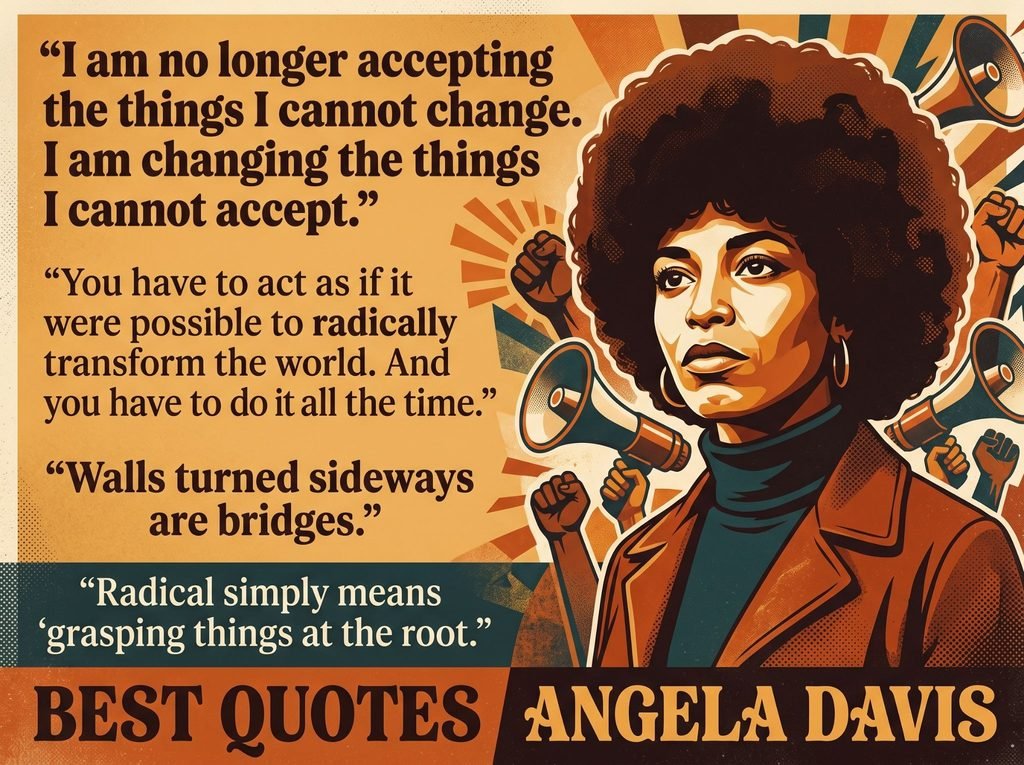
Social justice is about more than punishment for wrongdoing. It also involves protecting human rights, addressing the causes of harm, and ensuring that institutions treat people fairly. These reflections explore justice, dignity, accountability, and the meaning of a humane criminal justice system.
1. Justice should protect human dignity rather than diminish it. A fair society must consider both accountability and the conditions that lead to harm.
2. Human rights belong to everyone. They should not depend on wealth, social status, race, or public approval.
3. A just legal system must treat people fairly. Laws lose public trust when their protections are applied unequally.
4. Justice requires us to listen before reaching conclusions. Understanding different experiences can reveal what fairness truly demands.
5. Punishment alone cannot resolve every social problem. Communities also need education, stable housing, healthcare, and meaningful support.
6. Accountability becomes more effective when it encourages responsibility. A humane approach seeks ways to prevent future harm while respecting the people affected.
7. Equality before the law should be a lived reality. Every person deserves fair treatment and access to meaningful legal protection.
8. Social justice begins by questioning what society accepts as normal. Problems that appear permanent can change when people examine their causes.
9. Human dignity should remain central during difficult debates. Respecting another person’s humanity does not require ignoring harmful behavior.
10. A fair society works to prevent injustice before it happens. Prevention, opportunity, and accountability can help communities build lasting trust.
Angela Davis Quotes on Feminism and Women’s Rights
Feminism examines the social, economic, and political barriers that affect women. Black feminism and intersectionality also highlight how gender interacts with race, class, and other aspects of social life. These reflections focus on women’s rights, reproductive rights, and the importance of inclusive feminist movements.
1. Women’s equality requires equal respect and opportunity. It also requires challenging the traditions that limit women’s choices.
2. Feminism becomes stronger when it includes women from different backgrounds. No movement can represent everyone while ignoring those facing multiple forms of discrimination.
3. Every woman deserves control over important decisions about her life. Personal freedom must include bodily autonomy, safety, and access to healthcare.
4. Gender equality cannot be separated from economic fairness. Women need opportunities to learn, work, lead, and support themselves.
5. Black feminism reminds us that women’s experiences are not identical. Listening to those differences helps create a more inclusive movement.
6. Women’s voices deserve a place in every serious public discussion. Representation matters when decisions affect women’s lives and futures.
7. Equality means challenging unfair expectations placed on women. It also means allowing women to define success on their own terms.
8. Reproductive rights are connected to personal freedom and human dignity. People need reliable information and appropriate healthcare to make informed decisions.
9. A movement for women’s liberation must recognize different forms of oppression. Its purpose should be to expand freedom rather than create new boundaries.
10. Women’s empowerment grows when support becomes practical. Fair workplaces, accessible education, and protection from violence can turn equality into everyday experience.
Angela Davis Quotes on Education and Knowledge
Education can help people understand the world, question assumptions, and participate in public life. Critical thinking is especially important when studying history, social inequality, and political power. These reflections explore knowledge, educational equality, and the relationship between learning and social change.
1. Education should teach people how to think, not simply what to remember. Questions often lead to deeper understanding than unquestioned answers.
2. Knowledge becomes more valuable when it helps us understand real problems. Learning can guide responsible decisions in our homes, schools, and communities.
3. Every student deserves access to meaningful educational opportunities. A person’s future should not be limited by their family’s income or background.
4. History becomes clearer when we examine different perspectives. Studying overlooked experiences helps create a fuller understanding of the past.
5. Critical thinking begins when curiosity replaces blind acceptance. A thoughtful learner asks questions and considers evidence before reaching conclusions.
6. Education can challenge prejudice by encouraging understanding. It gives people opportunities to examine stereotypes and recognize shared humanity.
7. A classroom can become a place where difficult ideas are discussed respectfully. Honest debate helps students develop independent judgment.
8. Learning should not end when formal schooling finishes. Reading, listening, and reflecting help people keep growing throughout life.
9. Equal education requires more than opening school doors. Students also need supportive teachers, useful resources, safe environments, and fair treatment.
10. Knowledge can encourage people to take part in society. Understanding public issues helps individuals make informed choices and contribute to positive change.
Angela Davis Quotes on Activism and Social Movements
Activism brings people together to address problems that individuals may struggle to solve alone. Social movements can challenge unfair policies, change public conversations, and create pressure for reform. These reflections focus on political activism, grassroots organizing, and collective responsibility.
1. Activism begins when concern becomes action. Even a small contribution can support a much larger effort for change.
2. Social movements grow through shared purpose. People become stronger when they organize around clear goals and common values.
3. Meaningful activism requires listening as well as speaking. Communities need space to describe their problems and help shape their solutions.
4. Progress rarely follows a perfectly straight path. Activists must learn from setbacks and adjust their strategies without abandoning their principles.
5. Grassroots organizing connects broad ideas with local needs. Real progress often begins with people working together in their own communities.
6. A movement should welcome thoughtful questions. Examining its methods can help it remain accountable to the people it serves.
7. Political activism involves more than public demonstrations. Research, education, community service, and sustained organizing can also create change.
8. Collective action gives ordinary people a way to influence public decisions. Cooperation can turn individual concerns into a shared demand for fairness.
9. Strong movements develop leaders while encouraging participation. Their future becomes more secure when knowledge and responsibility are shared.
10. Activism is a long-term commitment to improving society. Consistent effort can matter even when immediate results are difficult to see.
Angela Davis Quotes on Change and Social Progress
Social change often begins when people recognize that existing conditions do not have to remain permanent. Progress may involve changing laws, improving institutions, or rethinking familiar beliefs. These reflections explore radical change, transformative action, and the work required to build a better society.
1. Change begins when people question what they once accepted. New possibilities emerge when old assumptions are examined carefully.
2. Social progress requires both imagination and practical effort. A better future becomes more realistic when people work toward specific goals.
3. Lasting change often develops through many small steps. Consistent efforts can eventually reshape habits, institutions, and public expectations.
4. Reform matters when it improves people’s lives. Meaningful progress should be judged by the opportunities and protections it creates.
5. A difficult problem should not be mistaken for an impossible one. Communities can find new solutions when they combine experience with fresh ideas.
6. Transformative change asks us to examine the roots of a problem. Treating symptoms alone may leave the underlying causes untouched.
7. Progress requires a willingness to learn from mistakes. Honest evaluation helps people improve their plans and avoid repeating harmful patterns.
8. The future is influenced by choices made today. Every responsible action can contribute to the kind of society we hope to build.
9. Change becomes stronger when people share responsibility for it. Cooperation helps turn ambitious goals into achievable community projects.
10. Social progress is not measured by words alone. It becomes visible when fairness, opportunity, and human dignity improve in everyday life.
Angela Davis Quotes on Hope and Optimism
Hope can help people continue working toward justice when progress seems slow. It does not require ignoring hardship or pretending that every problem has an easy solution. These reflections explore optimism, collective hope, resilience, and the determination to keep moving forward.
1. Hope gives people a reason to continue during uncertain times. It becomes more powerful when paired with practical action.
2. Optimism does not mean denying reality. It means recognizing difficulties while remaining open to the possibility of improvement.
3. Collective hope grows when people support one another. Shared effort can make difficult challenges feel less overwhelming.
4. Small victories deserve recognition. They remind communities that progress is possible and that continued effort can matter.
5. Difficult seasons do not determine the whole future. New opportunities can emerge when people remain willing to learn and adapt.
6. Hope becomes meaningful when it leads to responsibility. Believing in change should encourage us to help make it happen.
7. Resilience does not mean never feeling discouraged. It means finding ways to recover, seek support, and continue when possible.
8. A hopeful community makes room for different voices. People are more likely to believe in change when they can participate in creating it.
9. Progress can be difficult to notice while it is happening. Patience helps us recognize gradual improvements without ignoring unfinished work.
10. The future is not completely settled by present circumstances. Thoughtful choices and collective action can open doors that once seemed closed.
Angela Davis Quotes on Prison and Mass Incarceration
Angela Davis is widely associated with critical discussions of prisons, the prison industrial complex, and prison abolition. These topics examine the relationship between punishment, inequality, public safety, and social conditions. The following reflections consider criminal justice reform and the idea of building safer communities through prevention and support.
1. Public safety should include protecting people from harm before it occurs. Strong communities need prevention, support services, and fair responses to wrongdoing.
2. Mass incarceration raises important questions about justice and inequality. A society should examine whether its policies address the causes of harm effectively.
3. Prison abolition encourages people to imagine alternatives to relying heavily on imprisonment. It also invites serious discussion about accountability, prevention, and community safety.
4. The criminal justice system should be examined through evidence and lived experience. Fair policies require attention to their real effects on individuals and communities.
5. Punishment cannot replace every form of social support. Education, housing, mental healthcare, and employment opportunities can help address some conditions associated with harm.
6. A humane justice system must recognize the dignity of every person. Accountability and respect for human rights should remain compatible goals.
7. Police violence deserves serious public scrutiny. Transparent investigations and responsible oversight can help protect communities and strengthen trust.
8. The history of the war on drugs raises questions about enforcement and unequal outcomes. Reviewing that history can inform more effective and equitable policies.
9. Prison reform and prison abolition involve different approaches to changing punishment systems. Both require clear thinking about safety, accountability, and the needs of affected communities.
10. A safer society invests in the conditions people need to thrive. Prevention and support should be part of any serious discussion about justice.
Short and Powerful Angela Davis Quotes
Short quotes can communicate complex ideas in just a few words. They are useful for reflection, classroom discussions, and social media captions. The following lines are original, quote-style reflections on themes associated with Angela Davis’s work, not verified quotations from her.
1. Freedom requires courage. Equality requires action.
2. Question unfair systems. Imagine better possibilities.
3. Justice needs accountability. Humanity needs compassion.
4. Knowledge challenges prejudice. Critical thinking opens minds.
5. Hope encourages action. Collective effort creates possibilities.
6. Equality belongs to everyone. Dignity should never be conditional.
7. Resistance begins with awareness. Progress grows through persistence.
8. Change needs imagination. Transformation needs commitment.
9. Listen to overlooked voices. Build a more inclusive future.
10. Stand for human dignity. Work toward a fairer world.
Inspirational Angela Davis Quotes for Hard Days
Working toward personal goals or social change can become exhausting. Difficult days may bring uncertainty, disappointment, or the feeling that progress is too slow. These original reflections offer encouragement while recognizing that meaningful work often requires patience, rest, and support.
1. You do not need to solve every problem today. Take one useful step and give yourself room to continue tomorrow.
2. Slow progress is still progress. Keep learning from the challenges that teach you how to move forward.
3. Difficult moments do not erase the work you have already done. Give yourself credit for continuing through uncertainty.
4. You can acknowledge fear without allowing it to make every decision. Courage often begins with one thoughtful action.
5. Rest can support long-term commitment. Taking care of yourself can help you return to important work with greater clarity.
6. When the future feels uncertain, focus on what you can influence. Small, practical decisions can restore a sense of direction.
7. You are allowed to ask for help. Shared burdens often become easier to manage when trusted people work together.
8. A setback can reveal what needs to change. Use the experience to refine your approach rather than define your worth.
9. Keep your values close when circumstances become difficult. They can help you choose a responsible next step.
10. You do not have to see the entire path before beginning. Sometimes a clear purpose and one manageable action are enough.
Angela Davis Quotes on Black Liberation
Black liberation involves the pursuit of freedom, dignity, and equal opportunities for Black communities. It also includes examining the historical and institutional conditions that have shaped racial inequality. These reflections focus on liberation, self-determination, cultural understanding, and collective progress.
1. Liberation means creating conditions in which people can live with dignity. It requires challenging barriers that limit freedom and opportunity.
2. Black history offers important lessons about courage and collective struggle. Understanding that history helps explain the continuing pursuit of racial justice.
3. Freedom becomes more meaningful when communities can shape their own futures. Self-determination requires opportunity, representation, and respect.
4. Liberation is not only about removing restrictions. It is also about building institutions that support education, safety, and well-being.
5. Communities grow stronger when their histories are respected. Recognition helps people understand their experiences and share them with future generations.
6. Black liberation connects individual dignity with collective opportunity. A person’s freedom should not depend on accepting inequality for others.
7. Cultural understanding can challenge harmful stereotypes. Learning about different experiences helps people recognize the complexity of human lives.
8. Liberation movements benefit from honest reflection. Examining past victories and mistakes can strengthen future efforts.
9. Equal participation requires more than symbolic recognition. Communities need meaningful influence over decisions that affect their lives.
10. A liberated future must make room for everyone to thrive. Justice grows when freedom and opportunity become shared realities.
Angela Davis Quotes on Civil Rights and Equality
Civil rights protect people’s ability to participate in society without discrimination. Equality requires fair treatment, meaningful legal protections, and opportunities to exercise fundamental freedoms. These reflections focus on civil rights, democratic participation, and the continuing work of protecting human dignity.
1. Civil rights protect the freedom to participate in public life. Their value becomes clear when every person can exercise them without fear.
2. Equal rights should not depend on public opinion. Fundamental protections must remain meaningful even when defending them becomes difficult.
3. Democracy requires people to understand their rights. Informed citizens are better prepared to question unfair decisions.
4. Legal equality is an essential starting point. Society must also examine whether people can access the protections that laws promise.
5. Civil rights movements remind us that progress requires participation. Change becomes possible when people organize around shared demands for fairness.
6. Discrimination can prevent people from using opportunities available to others. Fair policies should address barriers rather than ignore their effects.
7. Voting is important, but civic participation takes many forms. Community organizing, public discussion, and peaceful advocacy also influence society.
8. Equality becomes stronger when institutions are accountable. Transparent decisions can help people understand how power is used.
9. Rights are easier to protect when communities understand their importance. Education can encourage people to defend both their own freedoms and those of others.
10. Civil rights remain relevant whenever people face unequal treatment. Protecting them is an ongoing responsibility, not a completed task.
Angela Davis Quotes on Capitalism and Inequality
Discussions of capitalism and inequality examine how economic systems distribute wealth, work, and opportunity. Angela Davis’s political thought is often discussed alongside questions about class, racial injustice, and the relationship between labor and social power. These reflections explore economic fairness without treating complex issues as having only one solution.
1. Economic opportunity should not depend entirely on the circumstances of birth. Fairer systems give people meaningful chances to learn, work, and thrive.
2. Poverty cannot be understood through individual choices alone. Wages, housing costs, education, and public policy also shape people’s options.
3. Economic inequality can affect access to healthcare and education. Addressing these differences helps communities expand opportunity.
4. Work deserves fair compensation and respectful treatment. People should not have to sacrifice basic dignity to earn a living.
5. Economic systems should be examined through their effects on human lives. Growth matters, but so do security, opportunity, and well-being.
6. Wealth can influence political power. Transparent institutions and public accountability help protect democratic participation.
7. Economic fairness does not require ignoring personal responsibility. It requires recognizing that responsibility operates within real social and financial conditions.
8. Communities benefit when people can meet their basic needs. Stable housing, education, and healthcare can support greater participation in society.
9. Racial inequality and economic inequality can reinforce each other. Understanding their relationship helps explain why some barriers persist across generations.
10. A fair economy should create opportunities for more people to prosper. Its success should be considered alongside the quality of life it makes possible.
Angela Davis Quotes on Political Activism
Political activism gives people ways to challenge decisions, influence policy, and demand accountability. It may include peaceful protest, public education, voting, research, organizing, and direct community involvement. These reflections emphasize thoughtful participation and the importance of connecting political beliefs with responsible action.
1. Political activism begins with understanding the issue. Clear information helps people choose actions that address the real problem.
2. Public pressure can bring neglected concerns into political discussions. Organized citizens can encourage institutions to respond to community needs.
3. Activism requires both conviction and careful judgment. Strong principles become more effective when supported by evidence.
4. Political participation should include people who are often overlooked. Decisions improve when affected communities have meaningful opportunities to contribute.
5. A peaceful protest can make a public concern visible. Its impact can grow when the message is clear and connected to practical goals.
6. Activists should examine the results of their strategies. Learning from experience helps movements remain effective and accountable.
7. Political change rarely belongs to one person alone. Many achievements emerge from years of shared effort.
8. Responsible activism respects the dignity of others. Challenging injustice does not remove the need for honesty and care.
9. Public policy affects everyday life in important ways. Understanding those policies helps citizens make informed demands for change.
10. Lasting political engagement requires patience. Consistent participation can keep important issues in public view long after attention fades.
Angela Davis Quotes on Solidarity and Unity
Solidarity means working together while recognizing that people may have different experiences and needs. It does not require everyone to think alike. These reflections focus on cooperation, mutual respect, and collective responsibility across communities and social movements.
1. Solidarity begins with recognizing another person’s struggle. Listening with respect can create the trust needed for cooperation.
2. Unity is strongest when differences are acknowledged. People can share a purpose without pretending that every experience is the same.
3. Collective work can accomplish what isolated efforts cannot. Cooperation allows people to combine knowledge, skills, and resources.
4. Solidarity requires more than supportive words. It becomes visible through consistent choices and practical assistance.
5. Trust grows when people keep their commitments. Reliable support helps communities work through disagreement and difficulty.
6. A united movement makes room for honest discussion. Respectful disagreement can improve decisions instead of weakening shared goals.
7. People become stronger when they share responsibility. No individual should have to carry every part of a common struggle.
8. Solidarity crosses boundaries when people recognize shared human dignity. Mutual respect can create meaningful connections between different communities.
9. Cooperation requires attention to who is being heard. Inclusive conversations help prevent unity from becoming a reason to silence others.
10. Strong communities celebrate one another’s contributions. Shared success becomes more meaningful when everyone has a chance to participate.
Angela Davis Quotes on Resistance and Revolution
Resistance can take many forms, from challenging discriminatory policies to questioning harmful social expectations. Revolution can refer to profound changes in political, economic, or social structures. These reflections consider principled resistance, nonviolent advocacy, and the work of imagining alternatives to injustice.
1. Resistance begins when people refuse to treat injustice as inevitable. Questioning accepted practices can reveal opportunities for change.
2. Meaningful resistance requires understanding what must change. Clear goals help people choose responsible and effective strategies.
3. Revolution involves more than replacing familiar leaders. Lasting transformation also requires examining the structures that distribute power.
4. Courage does not mean acting without thought. Effective resistance combines conviction with careful planning.
5. Peaceful protest can challenge unfair treatment. Public participation gives communities a way to express demands and seek accountability.
6. Resistance becomes stronger when it includes learning. Studying history can help movements understand both successful strategies and costly mistakes.
7. A new future requires more than criticism of the present. People must also imagine institutions and practices that better serve their communities.
8. Principled resistance can protect the dignity of vulnerable people. Its methods should reflect the values it hopes to advance.
9. Social transformation often takes sustained effort. Persistence helps people continue working when immediate victories remain out of reach.
10. Revolution should invite serious questions about the future. The goal is not change for its own sake, but a more just and humane society.
Angela Davis Quotes on Democracy and Freedom
Democracy depends on participation, accountability, and respect for fundamental rights. Freedom is weakened when people cannot influence decisions that shape their lives. These reflections explore democratic institutions, public responsibility, and the relationship between political freedom and equal opportunity.
1. Democracy becomes stronger when people participate. Public decisions should reflect informed discussion rather than the interests of a narrow group.
2. Freedom includes the ability to question authority. Accountable institutions should be able to respond to criticism with evidence and transparency.
3. Voting is an important democratic right. Meaningful democracy also depends on civic education, public debate, and community involvement.
4. Democratic societies must protect minority rights. The preferences of the majority should not erase the dignity of others.
5. Freedom requires access to reliable information. People need facts and diverse perspectives to make informed decisions.
6. Public institutions earn trust through fair treatment. Transparency helps citizens understand how decisions are made and who benefits from them.
7. Democracy is more than a political structure. It is also a commitment to listening, participation, and shared responsibility.
8. People should have meaningful opportunities to influence their communities. Local participation can connect public decisions with everyday needs.
9. Political freedom is limited when fear prevents people from speaking. Protecting peaceful expression helps democratic life remain open and accountable.
10. A healthy democracy keeps examining itself. Reform and public participation can help institutions respond to changing needs.
Angela Davis Quotes on Oppression and Power
Oppression occurs when people or groups face systematic restrictions on their rights, opportunities, or freedom. Understanding power means examining who makes decisions, whose interests are protected, and whose experiences are overlooked. These reflections explore inequality, accountability, and the importance of questioning unfair structures.
1. Oppression becomes harder to challenge when it is treated as normal. Recognizing unfairness is an important step toward changing it.
2. Power should be examined through its effects on people’s lives. Decisions deserve scrutiny when they limit the rights or opportunities of others.
3. Unfair systems often survive because their benefits are unevenly distributed. Understanding who gains and who loses can reveal why reform is resisted.
4. People should be able to question powerful institutions without fear. Open discussion can help expose mistakes and encourage accountability.
5. Oppression can affect access to education, employment, housing, and safety. Addressing these barriers requires attention to both individual experiences and institutional practices.
6. Inequality becomes more difficult to challenge when people feel isolated. Shared knowledge and collective support can help communities recognize common problems.
7. Authority does not automatically make a decision fair. Decisions should be evaluated through evidence, consequences, and respect for human rights.
8. Challenging oppression requires listening to those affected by it. Their experiences can identify problems that distant decision-makers may overlook.
9. Accountability matters wherever power is concentrated. Clear rules and independent oversight can reduce the risk of abuse.
10. A fair society distributes opportunity more widely. It also creates ways for people to challenge decisions that harm their communities.
Angela Davis Quotes on Collective Action
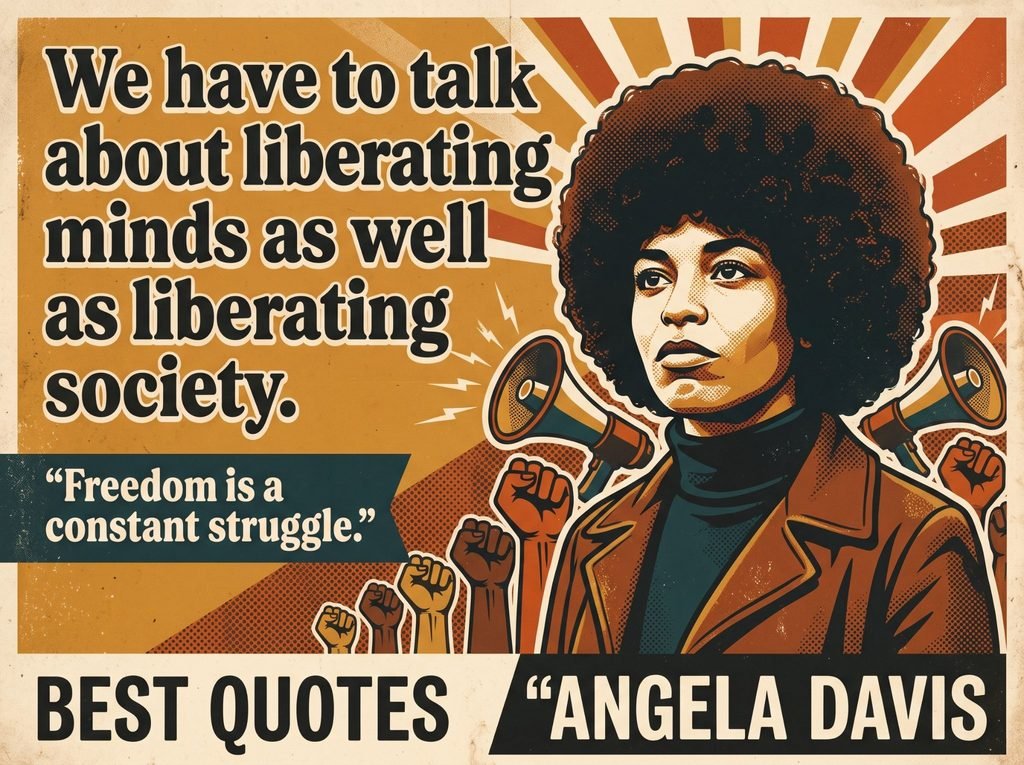
Collective action allows people to combine their time, knowledge, and abilities to address shared problems. It plays an important role in community organizing, social movements, and campaigns for political reform. These reflections explain why cooperation, participation, and shared responsibility matter when people work toward common goals.
1. Collective action begins when people recognize a shared concern. Cooperation helps transform that concern into a practical plan.
2. One person’s effort can inspire others to participate. Shared involvement can make a community project stronger and more sustainable.
3. Collective action requires clear communication. People work better together when they understand the purpose and responsibilities of the group.
4. A strong community values every contribution. Different skills and experiences can support the same goal in different ways.
5. Shared responsibility makes long-term work more manageable. Distributing tasks helps prevent a small number of people from carrying the entire burden.
6. Cooperation becomes more effective when people trust one another. Honesty and reliability help groups navigate difficult decisions.
7. Collective action should include the people most affected by a problem. Their participation can make proposed solutions more realistic and useful.
8. Progress is easier to sustain when communities share knowledge. Teaching others helps successful ideas reach beyond their original setting.
9. A group can learn from both achievements and setbacks. Reflection helps people improve their methods and maintain their commitment.
10. Shared goals can connect people with different backgrounds. Respectful cooperation allows them to work together without erasing their individual perspectives.
Angela Davis Quotes on Women’s Liberation
Women’s liberation seeks to remove the social, political, and economic barriers that restrict women’s freedom. It includes equal opportunities, protection from violence, reproductive autonomy, and recognition of women’s contributions. These reflections also consider how race and class shape the experiences of women within liberation movements.
1. Women’s liberation means having meaningful choices. Women should be able to shape their futures without unfair restrictions.
2. Equal rights matter in the home as well as in public life. Respectful relationships require shared responsibility and freedom from coercion.
3. Women’s work deserves recognition and fair treatment. Economic independence can expand the choices available to women.
4. Liberation must include women from different racial and economic backgrounds. A movement becomes more representative when it listens to varied experiences.
5. Women should have opportunities to lead and influence decisions. Leadership becomes fairer when barriers to participation are removed.
6. Education can expand women’s independence. Access to knowledge and skills helps people make informed choices about their lives.
7. Freedom from violence is essential to equality. Communities and institutions must take safety seriously and support those affected by abuse.
8. Reproductive freedom involves informed decisions and access to appropriate healthcare. Respecting autonomy means taking people’s circumstances and choices seriously.
9. Women’s liberation benefits from solidarity across generations. Sharing experience can help younger people understand past struggles and future possibilities.
10. Equality should be measured through everyday realities. Fair pay, safety, education, and decision-making power all matter.
Angela Davis Quotes on Human Dignity and Respect
Human dignity means recognizing that every person deserves basic respect. It remains important during disagreements, public debates, and discussions about justice or accountability. These reflections explore human rights, compassion, equal treatment, and the value of recognizing every person’s humanity.
1. Every person deserves to be treated with dignity. Respect should not depend on status, wealth, or popularity.
2. Human rights protect the basic worth of individuals. A fair society works to ensure that these protections are meaningful in practice.
3. Respect does not require agreement. People can disagree strongly while recognizing one another’s humanity.
4. Dignity matters most when circumstances are difficult. The way society treats vulnerable people reveals the strength of its values.
5. Fair treatment begins with listening carefully. Understanding another person’s experience can prevent assumptions from becoming unfair judgments.
6. Compassion and accountability can exist together. People can address harmful behavior without denying anyone’s basic humanity.
7. Human dignity should guide public institutions. Policies are more humane when they consider people’s needs and rights.
8. Respectful communities make room for different experiences. Inclusion allows people to contribute without hiding important parts of their lives.
9. No one should have to prove they deserve basic respect. Dignity is a fundamental principle, not a prize for perfect behavior.
10. A humane society recognizes the value of every person. That recognition should influence its laws, relationships, and everyday decisions.
Angela Davis Quotes on Peace and Nonviolence
Peace involves more than the absence of visible conflict. Lasting peace also depends on safety, fairness, trust, and ways to resolve disagreements without causing harm. These reflections consider nonviolent advocacy, community well-being, and the social conditions that help peace endure.
1. Peace grows when people have fair ways to resolve conflict. Listening and honest communication can prevent disagreements from becoming destructive.
2. Nonviolence requires courage and discipline. It asks people to pursue change without abandoning concern for human life.
3. Lasting peace depends on more than silence. Communities need justice, safety, and meaningful opportunities to address their grievances.
4. Respectful dialogue can reveal shared concerns. People may discover possible solutions even when they begin with different opinions.
5. Peaceful resistance can bring attention to injustice. Organized advocacy gives people ways to demand change without relying on violence.
6. Communities become safer when people trust one another. Fair institutions and reliable support can help build that trust.
7. Conflict should be addressed before resentment deepens. Early communication can create opportunities for understanding and repair.
8. Peace requires attention to the needs of vulnerable people. Safety is incomplete when some members of a community remain unprotected.
9. Compassion can help people respond thoughtfully to disagreement. It does not remove accountability, but it can make resolution more humane.
10. A peaceful future requires practical commitment. Fair opportunities, responsible leadership, and cooperation can help reduce the conditions that fuel conflict.
Angela Davis Quotes on Community and Empowerment
Community empowerment helps people gain the knowledge, resources, and influence needed to shape their own lives. It can involve local leadership, education, mutual support, and participation in public decisions. These reflections focus on belonging, grassroots action, and building communities where people can thrive.
1. Empowered communities help people recognize their abilities. Shared opportunities allow individuals to contribute their skills and experience.
2. Community strength grows through participation. People feel more invested when they can influence decisions that affect their lives.
3. Local knowledge deserves serious attention. Residents often understand their community’s needs in ways outsiders cannot fully appreciate.
4. Mutual support can make difficult circumstances more manageable. Neighbors working together can help build trust and practical solutions.
5. Community empowerment requires access to useful resources. Education, information, and fair opportunities help people turn ideas into action.
6. Strong communities welcome new voices. Participation becomes more meaningful when people from different backgrounds can contribute.
7. Local leadership grows when responsibility is shared. Developing new leaders helps communities continue their work over time.
8. Empowerment is more than encouragement. It includes giving people real opportunities to participate, decide, and make meaningful contributions.
9. Communities thrive when people recognize one another’s strengths. Cooperation can turn individual abilities into shared progress.
10. Lasting empowerment helps people shape their own future. The goal is not dependence on one leader, but the capacity to work together.
Angela Davis Quotes About Making a Difference
Making a difference does not always require a public platform or a large organization. Everyday choices, community participation, and consistent efforts can all contribute to positive change. These reflections explore personal responsibility, meaningful action, and the relationship between individual effort and collective progress.
1. Meaningful change begins with noticing what needs attention. Taking one responsible step can create momentum for further action.
2. You do not need to solve every problem to help. Focus on a contribution that matches your abilities and circumstances.
3. Small acts of fairness can influence everyday life. Consistent choices help create environments where people feel respected.
4. Making a difference requires more than good intentions. Practical action helps turn concern into a result that others can experience.
5. Listening can be a valuable contribution. Understanding people’s needs helps ensure that support is useful rather than based on assumptions.
6. Every community has opportunities for improvement. Local involvement can help address problems that might otherwise remain unnoticed.
7. Personal success can create opportunities to support others. Sharing knowledge and resources can expand the benefits of individual achievement.
8. Change becomes more sustainable when people work together. Cooperation helps useful ideas reach more people and last longer.
9. Learn from the results of your efforts. Reflection can help you make your next contribution more effective.
10. A meaningful life can include service to others. Helping build a fairer community gives everyday actions a wider purpose.
Read more:160+ Best Little Women Quotes About Love, Family, and Life (2026)
Famous Angela Davis Quotes That Challenge Society
Angela Davis’s public work has encouraged debate about racial justice, feminism, political power, and the prison system. Her ideas invite readers to question familiar assumptions and examine how social institutions affect people’s lives. The following are original reflections on challenging social norms, not verified quotations from Davis.
1. Society should not confuse tradition with fairness. Long-standing practices deserve examination when they limit people’s rights.
2. Progress begins when people question accepted explanations. Looking beyond familiar answers can reveal overlooked problems.
3. Public opinion can change when new experiences enter the conversation. Listening to different perspectives helps people reconsider their assumptions.
4. A policy should be judged by its real consequences. Good intentions cannot replace evidence about how decisions affect people’s lives.
5. Social criticism can be constructive when it identifies problems clearly. Thoughtful questions can help communities develop better solutions.
6. Institutions should be willing to examine their own practices. Accountability creates opportunities to correct mistakes and rebuild trust.
7. Difficult conversations can reveal uncomfortable truths. Avoiding those discussions may allow harmful conditions to continue.
8. Challenging society does not mean rejecting every institution. It means examining what works, what causes harm, and what needs improvement.
9. A more equal future requires questioning who benefits from current arrangements. That examination can help identify opportunities for fairer policies.
10. Real progress requires more than changing public language. Institutions and everyday practices must also reflect the values people claim to support.
Deep and Thought-Provoking Angela Davis Quotes
Some ideas become more meaningful when we take time to reflect on them. Questions about freedom, responsibility, history, and justice rarely have simple answers. These original reflections invite deeper thought about individual choices, collective responsibility, and the kind of world people want to create.
1. Freedom asks us to consider how our choices affect others. Personal independence becomes more meaningful when it respects the dignity of everyone around us.
2. History is not only a record of what happened. It also helps us understand how present conditions developed and what might change them.
3. Justice requires examining both actions and circumstances. Understanding context can improve our response without removing the need for accountability.
4. The future is shaped by decisions that may seem ordinary today. Everyday choices can reinforce existing conditions or help create something better.
5. Knowledge can challenge comfortable beliefs. Growth often begins when we become willing to reconsider what we thought we understood.
6. Equality raises questions about opportunity as well as treatment. Fairness sometimes requires changing the conditions that prevent people from participating fully.
7. Responsibility extends beyond our personal interests. We also influence the communities and institutions that shape other people’s lives.
8. Hope is most useful when it faces reality honestly. Clear thinking helps turn possibility into practical effort.
9. Social change requires imagination and evidence. We need both the ability to envision alternatives and the discipline to test them.
10. A meaningful legacy is reflected in what continues after us. Sharing knowledge and supporting others can help important work reach future generations.
Best Angela Davis Quotes for Students and Young Activists
Students and young activists often face questions about identity, justice, education, and their role in society. Learning about political movements can help them understand how people have challenged discrimination and influenced public life. These original reflections encourage curiosity, critical thinking, and responsible participation.
1. Ask questions when an explanation feels incomplete. Curiosity can lead you toward stronger evidence and a clearer understanding.
2. Education gives you tools to examine the world. Use those tools to think independently and make informed decisions.
3. You do not need to know everything before getting involved. Begin by learning about the issue and listening to people affected by it.
4. Young people can contribute valuable ideas. Experience matters, but fresh questions can also reveal possibilities others have overlooked.
5. Study history before deciding that a problem has no solution. Earlier movements can offer useful lessons about persistence and strategy.
6. Strong opinions should remain open to evidence. Being willing to learn helps you become a more thoughtful advocate.
7. Respectful disagreement can improve your understanding. Listen carefully before deciding whether you accept another person’s argument.
8. Activism should be guided by clear goals. Knowing what you want to change makes it easier to choose useful actions.
9. Protect your ability to learn and reflect. A thoughtful activist understands that personal growth and collective responsibility can develop together.
10. Your contribution does not have to be dramatic. Consistent learning, community involvement, and responsible choices can all support positive change.
Angela Davis Quotes for Instagram Captions
Short captions can communicate ideas about equality, freedom, and social justice in a simple way. They can also encourage meaningful discussion when paired with relevant images or personal reflections. The following original lines work as caption ideas, but they should not be presented as direct Angela Davis quotations.
1. Freedom should open doors for everyone. Equality begins when opportunity becomes real.
2. Question injustice. Make room for change.
3. Knowledge builds awareness. Action gives awareness direction.
4. Choose courage over silence. Choose understanding over prejudice.
5. Stand for dignity. Work toward equality.
6. Hope is a starting point. Collective action moves it forward.
7. Listen to every voice. Respect every person’s humanity.
8. Think critically. Act responsibly.
9. A fairer future starts with today’s choices. Let your actions reflect your values.
10. Real change takes commitment. Keep learning and keep contributing.
Most Memorable Angela Davis Quotes About Life and Society
Angela Davis’s work connects personal experience with larger questions about history, institutions, and collective freedom. Her public legacy encourages readers to consider how individual choices relate to social responsibility. These final reflections bring together themes of dignity, education, equality, and meaningful participation in society.
1. Life becomes richer when we look beyond our own concerns. Understanding other people’s experiences can broaden our sense of responsibility.
2. Society is shaped by the choices people make together. Shared decisions can reinforce inequality or create opportunities for improvement.
3. Learning helps us recognize complexity. A thoughtful approach leaves room for evidence, reflection, and changing our minds.
4. Human dignity should guide our relationships. Respect becomes meaningful when it influences how we treat people during everyday interactions.
5. Freedom involves both rights and responsibilities. Protecting our own choices should not require denying those of others.
6. Communities need people who are willing to participate. Constructive involvement helps connect shared values with practical improvements.
7. Equality grows through consistent effort. Fair treatment must be reflected in institutions as well as personal relationships.
8. History can help us understand the present. Its lessons become useful when we apply them thoughtfully to current challenges.
9. Social progress requires patience and accountability. We must celebrate improvements while remaining honest about unfinished work.
10. A better society is built through shared responsibility. Every generation has opportunities to protect human dignity and expand freedom.
Frequently Asked Questions
What are the Best Angela Davis Quotes about?
The Best Angela Davis Quotes focus on freedom, equality, education, and social justice. They encourage people to challenge injustice and create positive change.
Why are the Best Angela Davis Quotes so popular?
The Best Angela Davis Quotes remain popular because they address real social issues. Her words inspire courage, critical thinking, and collective action.
What can we learn from the Best Angela Davis Quotes?
The Best Angela Davis Quotes teach us to question unfair systems and support equality. They remind us that meaningful change requires effort.
Which Best Angela Davis Quotes are good for students?
The Best Angela Davis Quotes about education and freedom are useful for students. They encourage learning, independent thinking, and standing up for what is right.
How can I use the Best Angela Davis Quotes on social media?
You can share the Best Angela Davis Quotes as Instagram captions, Facebook posts, or educational content. Choose verified quotations that match your message.
Conclusion
Angela Davis has inspired many people through her words about freedom, equality, and social justice. The Best Angela Davis Quotes remind us to question unfair systems and stand up for what is right. Her ideas encourage people to think critically and support positive change. They also show why courage, knowledge, and unity matter in everyday life. These messages remain important for students, teachers, and social activists who want to make a difference.
The Best Angela Davis Quotes also highlight the power of education and collective action. Her ideas encourage readers to learn, speak up, and challenge inequality. Angela Davis quotes on education are especially meaningful because they show how knowledge can change minds and inspire progress. You can share these quotes on social media or use them for personal reflection. Let her powerful message remind you that even small actions can help build a fairer and more equal world for everyone.

QuotesWhisper is a welcoming destination for inspiring quotes, meaningful messages, and uplifting words, managed by Ethan Parker, an SEO content writer with 2 years of experience, focused on creating simple, thoughtful, and engaging content that helps readers find the right words for every feeling and occasion.