

The Best Albert Einstein Quotes offer timeless lessons about life, success, and happiness. Albert Einstein was a famous scientist known for his brilliant mind and creative ideas. His words encourage us to think differently and learn from our experiences. Each einstein quote shares a simple message that can inspire positive change. His thoughts remind us to stay curious, ask questions, and never stop learning. These quotes are still meaningful for readers of all ages.
The Best Albert Einstein Quotes also teach us about imagination, education, wisdom, and personal growth. Whether you need motivation or a fresh perspective, his words can brighten your day. These albert einstein short quotes are easy to remember and share with others. You will also find meaningful albert enstein quotes about success, creativity, and human nature. Let these inspiring words help you see life from a new point of view and discover wisdom in everyday moments.
Best Albert Einstein Quotes About Life and Its Meaning
Life becomes more meaningful when we look beyond daily routines and think about what truly matters. Einstein’s scientific curiosity reminds us that ordinary experiences can lead to extraordinary questions. These reflections focus on purpose, experience, personal growth, and the meaning of life.
- Life becomes richer when you remain curious about the world. Every ordinary day offers something new to understand.
- A meaningful life is not measured by possessions alone. Kindness and wisdom often leave the deepest marks.
- Experience teaches lessons that books cannot always explain. Reflection helps turn those lessons into lasting wisdom.
- Do not let routine make you forget the beauty of discovery. The world still holds questions worth asking.
- Your life gains direction when your actions reflect your values. Small choices can create meaningful change over time.
- Understanding yourself is an important part of understanding others. Honest reflection helps you recognize both your strengths and your limits.
- Life rarely follows a perfectly predictable path. Flexibility helps you grow when circumstances change.
- A difficult question can open the door to a better life. Sometimes understanding begins when easy answers disappear.
- Meaning grows when knowledge serves a purpose beyond personal gain. What you learn can become valuable through how you use it.
- Treat each experience as an opportunity to learn. Growth begins when you remain open to a different perspective.
Famous Albert Einstein Quotes on Success and Achievement
Success means more than reaching a goal or receiving public recognition. Einstein’s career demonstrates the value of persistence, careful thinking, and dedication to meaningful work. These Einstein-inspired reflections focus on achievement, ambition, character, and long-term progress.
- Real achievement begins with a clear purpose. Consistent effort helps turn that purpose into progress.
- Recognition may arrive late or never arrive at all. Meaningful work still has value when nobody is watching.
- Build your success on knowledge and character. Shortcuts cannot replace genuine understanding.
- Ambition becomes useful when it serves a worthwhile goal. Let your achievements contribute something positive to the world.
- Progress often begins with a question others overlook. Pay attention to problems that deserve a closer look.
- Success requires patience when results appear slowly. Keep improving your approach instead of abandoning your purpose.
- Your greatest achievement may be a problem you finally understand. Learning can be as valuable as winning.
- Measure progress by what you improve and contribute. Comparisons with others rarely tell the whole story.
- Failure can reveal weaknesses in your method. Use that information to make your next attempt stronger.
- Choose meaningful work over empty applause. A life guided by values offers a deeper kind of achievement.
Inspirational Albert Einstein Quotes to Motivate You
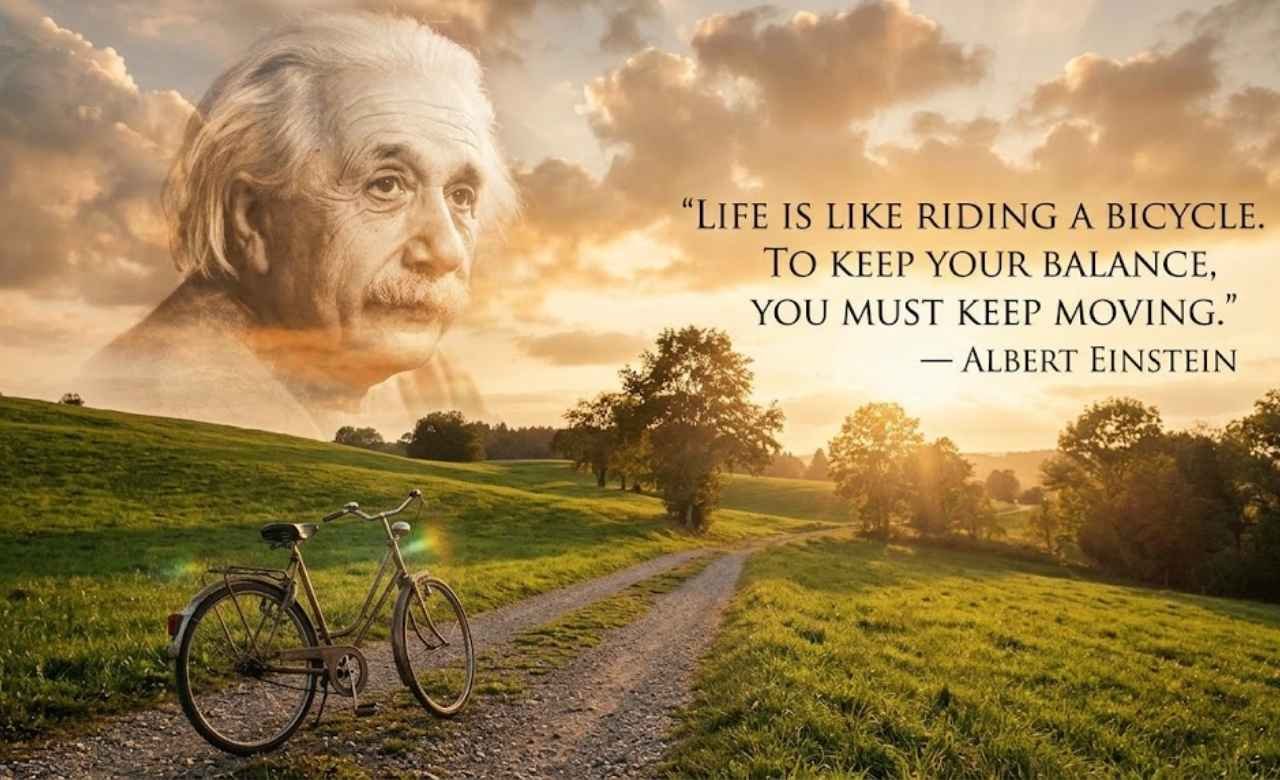
Motivation helps you begin, but perseverance helps you continue. Einstein’s scientific journey involved difficult questions, years of thought, and a willingness to challenge established ideas. The following reflections offer encouragement for personal growth, discipline, and positive action.
- Begin with the question you are afraid to ask. Courage often starts with honest curiosity.
- You do not need every answer before taking the first step. Learn as you move forward.
- Difficult work becomes manageable when you divide it into smaller tasks. Progress grows through repeated effort.
- Your current limitations do not define your future potential. Practice can expand what you are able to do.
- Keep learning when progress feels slow. Understanding often develops before visible success appears.
- A setback can change your direction without ending your journey. Use the experience to choose your next step wisely.
- Believe in the value of thoughtful effort. Patience gives good ideas time to develop.
- Let curiosity lead you toward better questions. Better questions can reveal possibilities you previously missed.
- You can make progress without being perfect. Improvement matters more than avoiding every mistake.
- Give your ideas room to grow through action. Even a small experiment can teach you something important.
Albert Einstein Quotes About Imagination and Creativity
Imagination played an important role in Einstein’s approach to scientific problems. He used thought experiments to examine ideas that could not always be tested directly through ordinary experience. These reflections explore creative thinking, originality, and the relationship between imagination and knowledge.
- Imagination allows the mind to consider possibilities beyond familiar experience. Creative ideas often begin with a simple question.
- Knowledge provides tools, while imagination helps you consider new uses for them. Both can contribute to meaningful discoveries.
- Creativity grows when you allow yourself to think differently. Familiar solutions are not always the most useful ones.
- A new perspective can transform an old problem. Sometimes the question needs to change before the answer becomes clear.
- Give your ideas time to develop before judging them. Early possibilities may contain the beginnings of something valuable.
- Original thinking requires the courage to examine unusual possibilities. Reason helps you decide which ideas deserve further testing.
- Imagination can turn abstract concepts into understandable pictures. Mental models help us examine what we cannot directly observe.
- Creative thinking becomes stronger through experimentation. Testing an idea reveals where it succeeds and where it needs work.
- Do not confuse originality with rejecting every established idea. Genuine creativity combines fresh thinking with careful evaluation.
- Let curiosity and imagination work together. One creates possibilities, while the other helps you investigate them.
Albert Einstein Quotes on Curiosity and Lifelong Learning
Curiosity encourages us to ask questions instead of accepting every explanation without thought. Einstein’s interest in fundamental scientific problems shows the value of continuing to learn throughout life. These reflections celebrate intellectual curiosity, self-education, and the search for understanding.
- Curiosity keeps the mind active at every stage of life. A thoughtful question can begin a lifelong journey.
- Never assume that familiar knowledge answers every question. New evidence can change what we understand.
- Learning becomes powerful when you connect ideas from different subjects. Unexpected connections can lead to fresh insights.
- Ask questions because you want to understand, not simply to appear intelligent. Genuine curiosity makes learning more rewarding.
- Every unanswered question offers a chance to investigate. Patience helps curiosity become useful knowledge.
- Lifelong learning begins with the willingness to admit what you do not know. Humility makes room for improvement.
- Read widely and think carefully about what you discover. Information becomes more useful when you examine its meaning.
- Let your interests guide you toward deeper study. Personal curiosity can sustain effort when learning becomes difficult.
- A strong learner welcomes thoughtful disagreement. Different perspectives can reveal weaknesses in familiar explanations.
- Keep your mind open without abandoning evidence. Curiosity works best when imagination and critical thinking support each other.
Albert Einstein Quotes About Education and Knowledge
Education is more than memorizing facts or passing examinations. It involves developing judgment, understanding relationships between ideas, and learning how to investigate problems independently. These reflections connect education, knowledge, and intellectual growth.
- Education should help you think, not merely remember. Understanding lasts longer than memorized information without meaning.
- Knowledge becomes valuable when you can apply it thoughtfully. Practical understanding connects learning with everyday life.
- A good question can reveal more than a rushed answer. Take time to understand what a problem actually requires.
- Learning does not end when formal schooling finishes. Independent study keeps your knowledge growing.
- Teachers can guide your progress, but curiosity must also come from within. Active learners take responsibility for their understanding.
- Facts become easier to remember when you understand their connections. Look for patterns rather than isolated details.
- Education should encourage thoughtful disagreement. Students learn when they can examine evidence and explain their reasoning.
- Intellectual growth requires patience with difficult subjects. Confusion can be part of developing a deeper understanding.
- Use books and experience as partners in learning. Each offers insights the other may not provide.
- The purpose of knowledge is not to impress others. It is to understand the world and make wiser decisions.
Wise Albert Einstein Quotes About Science and Discovery
Science advances through observation, experimentation, mathematical reasoning, and the willingness to revise explanations. Einstein’s contributions to physics transformed scientific understanding, but discovery also depends on collaboration and evidence. These reflections explore scientific thinking, research, and the pursuit of truth.
- Scientific discovery begins by noticing something that needs an explanation. Careful observation turns curiosity into investigation.
- A convincing idea must face the evidence. Confidence alone cannot establish whether a scientific claim is correct.
- Science improves when researchers test their assumptions. Results matter more than personal attachment to a theory.
- Complex questions often require patient investigation. Reliable discoveries rarely depend on one quick observation.
- Mathematical models help describe relationships in the natural world. Their usefulness depends on how well they match evidence.
- Every scientific answer can lead to another question. Discovery expands understanding without making curiosity unnecessary.
- Scientific thinking separates what we know from what we suspect. This distinction helps prevent unsupported conclusions.
- An unexpected result can reveal a weakness in an existing explanation. Treat surprising evidence as an opportunity to investigate.
- Collaboration allows researchers to examine problems from different angles. Shared knowledge can strengthen scientific progress.
- Respect evidence even when it challenges a familiar belief. Scientific discovery depends on a willingness to reconsider ideas.
Short Albert Einstein Quotes With Deep Meanings
Short sayings are easy to remember and share, especially when they express a useful idea in simple language. This section offers concise, Einstein-inspired reflections about knowledge, curiosity, and wisdom. These are original lines, not direct quotations from Einstein.
- Curiosity opens doors. Questions help you find them.
- Knowledge needs direction. Wisdom helps you choose it.
- Think beyond habit. Examine the reasons behind it.
- Mistakes offer information. Reflection turns it into learning.
- Imagination creates possibilities. Evidence helps test them.
- Keep asking questions. Understanding grows through inquiry.
- Simplicity takes thought. Clear explanations require real understanding.
- Stay open to change. New evidence can improve old ideas.
- Seek meaningful progress. Recognition is not the only reward.
- Learn from experience. Let each lesson improve your judgment.
Albert Einstein Quotes About Intelligence and Thinking
Intelligence is not simply the ability to remember facts or solve familiar problems quickly. It also involves recognizing patterns, evaluating evidence, and adapting when circumstances change. These reflections examine intelligence, logical thinking, and the value of intellectual humility.
- Intelligence becomes useful when it helps you understand a problem. Knowledge without judgment may still lead to poor decisions.
- Strong thinking begins with a clear definition of the question. A well-framed problem is easier to investigate.
- Do not mistake confidence for intelligence. Thoughtful people remain willing to examine their conclusions.
- Logical thinking helps reveal whether an argument makes sense. Evidence is still needed to determine whether its claims are true.
- Creative thinking introduces possibilities that routine methods may overlook. Careful analysis helps distinguish useful ideas from weak ones.
- Intellectual humility makes room for improvement. Admitting uncertainty can be a sign of sound judgment.
- A quick answer is not always the best answer. Complex questions deserve careful consideration.
- Learn to recognize the assumptions behind your reasoning. Hidden assumptions can shape conclusions without being noticed.
- Intelligence grows through practice and reflection. Challenge your mind with questions that require more than memorization.
- Use your abilities to solve problems that matter. Thoughtful action gives intelligence a practical purpose.
Albert Einstein Quotes on Love and Human Connection
Human connection depends on empathy, trust, respect, and an understanding of other people’s experiences. Although Einstein is best known for science, his public reflections and humanitarian concerns also made him a familiar figure beyond academic circles. These original reflections focus on love, compassion, and meaningful relationships.
- Love grows when people listen with genuine attention. Understanding begins when you make room for another person’s experience.
- Strong relationships need both honesty and kindness. Truth becomes easier to hear when delivered with respect.
- Compassion asks you to look beyond your own perspective. Another person’s struggles may not be visible from the outside.
- Respect creates space for people to grow. Healthy relationships do not require everyone to think alike.
- Small acts of care can strengthen lasting connections. Consistency often matters more than dramatic gestures.
- Listen to understand rather than waiting for your turn to speak. Careful listening can prevent unnecessary misunderstandings.
- Love should encourage growth rather than control. Trust gives people room to develop their individuality.
- Differences can deepen a relationship when handled thoughtfully. Mutual respect helps people learn from one another.
- Kindness does not require you to agree with everyone. You can disagree while still treating others with dignity.
- Human connection gives knowledge a social purpose. Understanding people matters alongside understanding the world.
Albert Einstein Quotes About Happiness and Simplicity
Happiness does not always depend on wealth, status, or constant excitement. Many people find satisfaction through meaningful work, close relationships, gratitude, and a calmer approach to everyday life. These reflections explore simplicity, contentment, and a balanced perspective.
- Happiness can grow from appreciating ordinary moments. You do not need extraordinary circumstances to notice something good.
- A simpler life can leave more room for meaningful experiences. Fewer distractions may help you focus on what matters.
- Gratitude changes how you notice the world around you. It encourages you to recognize what is already valuable.
- Success and happiness are not always the same thing. Decide what a satisfying life means to you.
- Make room for rest as well as achievement. A balanced routine supports clearer thinking.
- Joy often appears in relationships and shared experiences. Pay attention to the people who make life meaningful.
- Avoid measuring your happiness against someone else’s life. Their circumstances and priorities may be very different from yours.
- Simplicity can clarify complicated choices. Knowing your priorities makes it easier to decide what deserves your time.
- Appreciate progress without demanding perfection. Contentment and ambition can exist together.
- Happiness becomes more sustainable when guided by personal values. Choose habits that support the life you want to build.
Albert Einstein Quotes on Dreams and Possibilities
Dreams encourage people to imagine what might be possible before they know exactly how to achieve it. Meaningful goals combine imagination with planning, learning, and practical effort. These reflections explore ambition, possibility, and the process of turning ideas into action.
- A dream gives your efforts a direction. A practical plan helps you move toward it.
- Possibilities become easier to explore when you question familiar limits. Some barriers are real, while others deserve closer examination.
- Let imagination help you picture a better future. Then identify the steps that could make it more likely.
- A worthwhile goal may require several attempts. Each attempt can reveal a better way forward.
- Do not confuse a difficult goal with an impossible one. Investigate the challenge before deciding what can be done.
- Dreams need more than enthusiasm. Learning and consistent action help turn ideas into progress.
- Keep your goals flexible when new information appears. Changing your method can help you preserve your purpose.
- Give ambitious ideas a fair examination. Practical experiments can reveal whether they deserve further investment.
- Progress often begins with a possibility others have ignored. Thoughtful exploration can show whether that possibility has merit.
- Build a future that reflects your values. Achievement becomes more meaningful when it serves a clear purpose.
Albert Einstein Quotes About Hard Work and Persistence
Important discoveries and personal achievements often require repeated effort. Persistence does not mean repeating the same unsuccessful method forever; it means learning, adapting, and continuing when a goal remains worthwhile. These reflections focus on discipline, patience, and perseverance.
- Consistent effort creates opportunities for improvement. Small steps can produce meaningful results over time.
- Persistence works best when combined with reflection. Change your approach when experience shows that something is not working.
- Difficult tasks become less intimidating when divided into stages. Focus on the next useful action instead of the entire challenge.
- Patience gives complex ideas time to develop. Rushing can hide details that deserve careful attention.
- Hard work matters most when directed toward a clear goal. Effort becomes more effective when you understand why it matters.
- A temporary setback does not erase earlier progress. Review what you have learned before beginning again.
- Discipline helps you continue when motivation fades. Useful routines reduce the need to rely on enthusiasm alone.
- Improvement often comes through repeated practice. Each attempt can strengthen your skills and judgment.
- Persistence should include the courage to change direction. Continuing intelligently is more valuable than refusing to adapt.
- Respect the work behind every meaningful achievement. Results often reflect many quiet efforts that others never see.
Albert Einstein Quotes on Failure and Making Mistakes
Mistakes are a natural part of learning, experimentation, and problem-solving. They can reveal flawed assumptions, missing information, or weaknesses in a method. These reflections explore how to learn from failure without treating every unsuccessful attempt as proof that you cannot succeed.
- A mistake can reveal what your first approach overlooked. Examine the result before deciding what to do next.
- Failure becomes useful when it changes your understanding. Repeating the same error without reflection wastes an opportunity to learn.
- Do not let embarrassment prevent honest evaluation. Recognizing a mistake is the first step toward correcting it.
- An unsuccessful experiment can still provide valuable information. Its results may help you reject a weak explanation.
- Treat criticism as information to examine, not an automatic judgment. Consider the evidence before accepting or rejecting it.
- Every learner has gaps in understanding. Finding those gaps gives you a clearer path toward improvement.
- Mistakes do not define your intelligence or character. Your response to them can shape what happens next.
- A failed plan may reveal that the goal needs a different method. Adapt your strategy using what you have learned.
- Take responsibility without turning every error into self-blame. Honest reflection supports better decisions.
- Let experience improve your future judgment. The value of a mistake lies partly in what you learn from it.
Albert Einstein Quotes About Truth and Reality
Truth requires more than accepting what feels familiar or convenient. It involves examining evidence, questioning assumptions, and recognizing the limits of personal understanding. These reflections consider reality, honesty, observation, and the importance of intellectual discipline.
- Reality does not change simply because an explanation feels comfortable. Good reasoning begins with a willingness to examine the evidence.
- Separate what you observed from what you concluded. This habit can prevent assumptions from becoming mistaken facts.
- Honest questions can expose weaknesses in familiar beliefs. Understanding improves when you investigate rather than defend every assumption.
- Truth deserves careful examination even when it challenges your expectations. Intellectual courage includes the willingness to revise your position.
- An appealing explanation is not necessarily an accurate one. Compare it with evidence before accepting its conclusions.
- Recognize the limits of what you know. Clear thinking begins when certainty matches the available evidence.
- Facts and interpretations are related but not identical. Understanding the difference helps you evaluate arguments more fairly.
- Be willing to correct an earlier conclusion. Revising your view can demonstrate intellectual growth.
- Evidence can improve a debate when both sides examine it honestly. Winning an argument is not the same as finding the truth.
- Seek explanations that withstand careful questioning. Reliable understanding grows through investigation and thoughtful revision.
Albert Einstein Quotes on Freedom and Independent Thinking
Independent thinking allows people to examine ideas instead of accepting them solely because they are popular or traditional. It does not mean rejecting expertise or evidence; it means using judgment to evaluate both. These reflections focus on intellectual freedom, originality, and personal responsibility.
- Think carefully before adopting another person’s opinion. Understanding the reasons behind a belief matters more than following a crowd.
- Independent thinking begins with honest questions. Curiosity helps you examine assumptions that others may overlook.
- Freedom of thought works best with responsibility. Consider how your decisions affect the people around you.
- Respect expertise without treating experts as infallible. Strong conclusions remain open to evidence and reasonable scrutiny.
- Do not reject an idea merely because it is unfamiliar. Examine its reasoning before deciding what you believe.
- Your perspective becomes stronger when tested against different viewpoints. Listening does not require surrendering your judgment.
- Popularity cannot replace evidence. An idea deserves evaluation based on its merits.
- Independent thinkers are willing to admit uncertainty. Intellectual freedom includes the ability to change your mind.
- Question traditions thoughtfully rather than automatically accepting or rejecting them. Understanding their purpose can help you decide whether they remain useful.
- Use your freedom to learn and contribute. Independent thought has greater value when it supports responsible action.
Albert Einstein Quotes About Time and Eternity
Time has a special place in Einstein’s scientific legacy because relativity changed how physicists understand time and space. Everyday expressions about time, however, should not be confused with technical claims from physics. These reflections consider patience, memory, change, and how people use their limited time.
- Time becomes meaningful through the experiences you choose to create. Spend it on activities that reflect your priorities.
- You cannot change yesterday, but you can learn from it. Reflection helps past experiences inform future choices.
- The future is shaped partly by decisions made today. Small actions can influence the direction of your life.
- Patience allows important work to develop. Not every worthwhile result arrives on your preferred schedule.
- Memories connect past experiences with present understanding. Revisiting them thoughtfully can reveal how you have changed.
- Time spent learning can create benefits far beyond the moment. Knowledge may influence decisions for years to come.
- Do not measure every day by productivity alone. Rest and relationships also contribute to a meaningful life.
- Change is part of human experience. Adaptability helps you respond when circumstances no longer match your expectations.
- A limited schedule can clarify your priorities. Choose carefully what deserves your attention.
- Think about the legacy of your daily choices. The way you use your time helps shape what you contribute.
Albert Einstein Quotes on Logic and Common Sense
Logic helps us examine whether conclusions follow from stated reasons. Common sense can be useful in everyday situations, but familiar intuition does not always explain complex scientific questions. These reflections explore reasoning, evidence, and careful decision-making.
- A logical conclusion depends on the quality of its starting assumptions. Examine both the reasoning and the information behind it.
- Common sense is useful, but it is not always sufficient. Complex problems may require evidence that challenges intuition.
- Define the problem before searching for a solution. Clear definitions help prevent wasted effort.
- Do not mistake a complicated explanation for a correct one. Check whether its reasoning is sound.
- Good reasoning considers alternative explanations. Comparing possibilities helps reveal weaknesses in an initial answer.
- Separate emotional reactions from factual claims. Both may matter, but they answer different questions.
- Look for contradictions in your own argument. Finding them can improve the strength of your conclusion.
- Logic becomes more useful when paired with accurate information. Even perfect reasoning can lead to a poor result when the facts are wrong.
- Avoid drawing broad conclusions from one example. A single experience may not represent a general pattern.
- Let evidence guide your decisions. Reasoning is strongest when it remains open to correction.
Albert Einstein Quotes About Technology and the Future
Technology can improve communication, scientific research, education, and daily life. It can also create new challenges when people use it without considering its effects. These reflections explore innovation, responsibility, and the relationship between technological progress and human values.
- Technology is most valuable when it solves a meaningful problem. Innovation should improve people’s ability to live and work well.
- New tools can expand human creativity. Their benefits depend partly on how thoughtfully people use them.
- Progress requires more than building something new. Consider its safety, usefulness, and wider consequences.
- The future cannot be predicted perfectly. Careful planning helps people prepare for different possibilities.
- Technological knowledge should be paired with ethical judgment. Capability alone does not determine whether an action is wise.
- Innovation grows through testing and revision. Early designs often improve when real-world results reveal their weaknesses.
- Use technology to support human connection rather than replace it entirely. Tools work best when they serve meaningful goals.
- A promising invention deserves careful evaluation. Ask who benefits, what risks exist, and what problems remain.
- Education helps people adapt to technological change. Learning new skills can make unfamiliar tools easier to understand.
- Build the future with responsibility in mind. Lasting progress considers people as well as machines.
Albert Einstein Quotes on Peace and Humanity
Einstein spoke publicly about peace, human responsibility, and the dangers of destructive conflict. His humanitarian concerns remain an important part of his public legacy. These reflections focus on compassion, cooperation, peaceful problem-solving, and the value of human life.
- Peace requires more than the absence of fighting. It also depends on justice, understanding, and responsible choices.
- Compassion helps people recognize suffering beyond their own experience. That awareness can encourage more thoughtful action.
- Cooperation makes difficult shared problems easier to address. Progress often depends on people working across differences.
- Disagreement does not have to become hostility. Respectful discussion can help people understand where their views differ.
- Human dignity should not depend on social status or personal advantage. Treating people fairly strengthens communities.
- Peaceful solutions require patience and honest communication. Listening can reveal possibilities that anger hides.
- Knowledge should serve humanity rather than destruction alone. Scientific progress carries responsibilities alongside its benefits.
- Small acts of kindness can improve the atmosphere around you. Respectful behavior helps build trust in everyday life.
- A shared problem can reveal common interests. Cooperation becomes easier when people recognize what they have in common.
- Consider the human consequences of important decisions. Wisdom includes thinking beyond immediate personal gain.
Albert Einstein Quotes About Nature and the Universe
Einstein’s scientific work changed how people understand gravity, space, and time. The universe remains a source of wonder because observation continues to reveal structures and processes beyond everyday experience. These reflections celebrate nature, scientific discovery, and humanity’s place in the wider cosmos.
- Nature invites questions that reach beyond everyday experience. Careful observation helps turn wonder into understanding.
- The universe is larger than any one person’s perspective. Humility helps us appreciate the limits of our knowledge.
- Looking closely at the natural world can reveal surprising patterns. Discovery often begins with patient attention.
- Scientific models help us investigate distant or invisible processes. Their strength depends on how well they explain observations.
- Wonder can motivate serious study. Curiosity encourages people to investigate what first seems mysterious.
- Mathematics provides tools for describing many natural relationships. Its usefulness becomes clearer when connected to evidence.
- New discoveries can change how we understand familiar phenomena. Scientific knowledge grows as explanations improve.
- Nature deserves attention as well as admiration. Observation helps us learn how natural systems function.
- The scale of the universe encourages intellectual humility. There is always more to investigate than one person can know.
- Let wonder lead to thoughtful questions. The search for understanding can be rewarding even before an answer appears.
Albert Einstein Quotes on Problem-Solving and Innovation
Problem-solving requires more than finding the first available answer. Effective thinkers define the challenge, identify assumptions, compare alternatives, and test possible solutions. These reflections explore innovation, creative thinking, and practical reasoning.
- Understand a problem before trying to solve it. A clear definition can prevent hours of unnecessary work.
- Break complicated challenges into smaller questions. Each answer can help clarify the larger problem.
- Examine the assumptions behind your first solution. A different starting point may reveal a better approach.
- Innovation often comes from combining existing ideas in new ways. Look for useful connections between subjects.
- Test your solution against real conditions. A promising theory must still work in practice.
- Learn from results that contradict your expectations. Unexpected outcomes can reveal flaws worth correcting.
- Compare several possible approaches before committing. Different methods may offer different advantages and risks.
- Simplicity can make a solution easier to understand and maintain. Remove unnecessary complexity without losing essential detail.
- Collaboration brings additional knowledge to difficult problems. Other perspectives can expose blind spots in your reasoning.
- Treat problem-solving as a process rather than a single event. Evaluate results and improve your method when necessary.
Albert Einstein Quotes About Wisdom and Critical Thinking
Wisdom involves applying knowledge with sound judgment. Critical thinking helps us evaluate evidence, identify assumptions, and recognize when a conclusion goes beyond what the facts support. These reflections connect Albert Einstein’s intellectual legacy with practical decision-making and lifelong learning.
- Wisdom begins when you recognize the limits of your knowledge. Humility keeps learning possible.
- Critical thinking asks how a claim is supported. Strong evidence matters more than confident presentation.
- Knowledge helps you understand information. Wisdom helps you decide what to do with it.
- Do not accept a conclusion without examining its reasoning. A clear argument should withstand reasonable questions.
- Good judgment considers both immediate results and long-term consequences. A convenient choice is not always the wisest one.
- Learn to distinguish evidence from assumption. This simple habit can improve many everyday decisions.
- Wisdom grows through reflection on experience. The lesson matters more than the event alone.
- A thoughtful person can change their position when evidence improves. Flexibility is compatible with strong principles.
- Ask what information might be missing. Unanswered questions can reveal weaknesses in an argument.
- Use knowledge with patience and compassion. Sound judgment considers facts as well as human consequences.
Albert Einstein Quotes on Questioning Everything
Questioning is central to scientific thinking because it helps reveal assumptions and identify problems worth investigating. However, healthy skepticism is different from rejecting every claim automatically. These reflections celebrate intellectual curiosity, careful inquiry, and evidence-based thinking.
- Ask why a familiar explanation makes sense. Understanding its reasoning is better than repeating it without thought.
- Question assumptions before building conclusions on them. An unnoticed assumption can shape an entire argument.
- Skepticism should encourage investigation rather than automatic rejection. Examine the evidence before deciding what to believe.
- Ask questions that clarify the problem. A precise question often leads to a more useful answer.
- Do not fear questions that challenge your current understanding. They may reveal where further learning is needed.
- Curiosity becomes productive when followed by careful research. Questions need evidence if they are to produce reliable answers.
- Examine claims from more than one perspective. Alternative explanations can expose weaknesses in an initial interpretation.
- Be willing to investigate ideas you disagree with. Understanding an argument is not the same as endorsing it.
- Question your own conclusions as carefully as you question others. Self-examination helps reduce blind spots.
- Keep searching when an answer remains incomplete. Intellectual curiosity makes room for continued discovery.
Funny Albert Einstein Quotes and Clever Sayings
Einstein’s recognizable image and reputation for unconventional thinking have inspired countless jokes and clever sayings. Unfortunately, many humorous lines circulating online are not reliably documented as his words. The following original, Einstein-inspired lines use light humor to celebrate curiosity, logic, and the occasional struggle to understand complicated ideas.
- My mind loves difficult questions. My laundry prefers simple solutions.
- I wanted to understand the universe. First, I had to find my missing notebook.
- Logic helps solve many problems. It still cannot explain why I entered a room and forgot why.
- Curiosity keeps the brain busy. Sometimes it also keeps bedtime waiting.
- Every complicated problem deserves careful thought. Some household instructions deserve a second cup of coffee.
- I enjoy challenging assumptions. My alarm clock remains unconvinced every morning.
- Learning never really ends. Neither does the list of things I thought I already knew.
- A brilliant idea needs testing. My theory about extra sleep is still under review.
- The search for knowledge is exciting. Remembering where I saved the research is another challenge.
- Thinking outside the box can be useful. Finding the box again might require a map.
Deep Albert Einstein Quotes That Make You Think
Deep sayings encourage readers to pause and examine their assumptions about life, knowledge, and human nature. Einstein’s work reminds us that the world can be more complex than everyday intuition suggests. These original reflections explore uncertainty, perspective, and the relationship between understanding and meaning.
- What you see depends partly on what you know. Learning can change the meaning of familiar experiences.
- Certainty feels comfortable, but it is not always justified. Wisdom requires knowing when the evidence remains incomplete.
- A question can be more valuable than an easy answer. It may reveal a problem that deserves deeper attention.
- Understanding grows when you connect details with the larger picture. Context can change how individual facts should be interpreted.
- The limits of knowledge are not reasons to stop learning. They are invitations to investigate further.
- A belief becomes stronger when it survives honest examination. Avoid protecting an idea from every possible challenge.
- The world does not need to fit your expectations. Better understanding begins when you examine reality on its own terms.
- Human intelligence can create remarkable things. Wisdom determines how responsibly those abilities are used.
- Simplicity is not always the absence of complexity. Sometimes it is the result of understanding complexity well.
- Meaning often develops through the questions you pursue. The search itself can change how you understand your life.
Read more:170+ The Song of Achilles Quotes That Will Break Your Heart (2026)
Motivational Albert Einstein Quotes for Students
Students can learn from Einstein’s persistence, curiosity, and willingness to investigate difficult problems. Academic progress is rarely a straight line, and struggling with a subject does not mean a student lacks ability. These reflections encourage study habits, self-education, and confidence grounded in effort.
- Every difficult subject becomes more manageable through practice. Start with the part you can understand and build from there.
- Ask for help when a concept remains confusing. A clear explanation can save time and strengthen your foundation.
- Do not judge your ability by one examination. A test measures performance at a particular moment, not your entire potential.
- Learning requires active participation. Explain ideas in your own words to check whether you understand them.
- Mistakes can show you exactly what to review. Use them to guide your next study session.
- Curiosity can make learning more enjoyable. Connect lessons to questions that genuinely interest you.
- Develop a study routine that you can maintain. Regular effort often works better than last-minute cramming.
- Compare your progress with your earlier understanding. Personal improvement offers a more useful measure than constant comparison.
- Read beyond the minimum when a topic interests you. Independent learning can deepen classroom knowledge.
- Keep asking questions when a lesson seems difficult. Persistence and effective strategies can help you make progress.
Albert Einstein Quotes About Society and Human Behavior
Understanding society requires attention to culture, cooperation, human needs, and the effects of individual choices. Einstein’s public life included concerns about war, civil rights, and the responsibilities of scientific knowledge. These reflections consider human behavior, fairness, and the value of thoughtful communities.
- Human behavior becomes easier to understand when we consider circumstances. Context can explain actions without automatically excusing them.
- Communities grow stronger when people contribute to shared goals. Cooperation allows individuals to achieve more together.
- Fairness requires looking beyond personal advantage. Consider how decisions affect people with less power.
- People often interpret events through their existing beliefs. Listening carefully can help reveal why perspectives differ.
- A disagreement can expose different priorities rather than simple ignorance. Understanding those priorities may improve communication.
- Social progress depends on both ideas and action. Good intentions matter, but practical effort is necessary too.
- Respectful communities make room for thoughtful disagreement. Differences can be discussed without denying anyone’s dignity.
- Human behavior is influenced by incentives and expectations. Changing circumstances can sometimes improve the choices people make.
- Responsibility includes considering the wider effects of personal decisions. Individual actions can contribute to larger social patterns.
- Compassion helps turn abstract principles into daily behavior. Treating people fairly begins with ordinary choices.
Most Famous Albert Einstein Quotes of All Time
Some Albert Einstein quotations have become widely recognized because they express memorable ideas about imagination, curiosity, simplicity, and learning. Exact wording and attribution should always be checked against reliable sources, especially before publishing quotations as historical fact. This section includes ten original summaries of themes commonly associated with Einstein’s public philosophy rather than claiming to reproduce his exact words.
- Imagination helps people consider possibilities beyond existing knowledge. Creative thinking can open new paths for investigation.
- Curiosity encourages the search for explanations. Asking questions keeps the process of learning alive.
- Learning requires more than collecting facts. Understanding grows when information becomes connected and meaningful.
- Independent thinking helps people examine familiar beliefs. Reason and evidence can improve the conclusions they reach.
- Scientific progress depends on testing ideas. Evidence helps distinguish useful explanations from unsupported assumptions.
- Simplicity can reveal deep understanding. A clear explanation makes a difficult idea easier to examine.
- Mistakes can support discovery when studied carefully. Each result can provide information for the next attempt.
- Knowledge has greater value when used responsibly. Human welfare should remain part of important decisions.
- Wonder can inspire serious intellectual work. Questions about the universe can lead to sustained scientific inquiry.
- Wisdom requires openness to new evidence. A willingness to revise beliefs helps knowledge continue to grow.
Best Albert Einstein Quotes to Live By Every Day
The most useful lessons from Einstein’s intellectual legacy can be applied to everyday choices. You do not need to be a scientist to practice curiosity, think independently, learn from mistakes, or treat others with compassion. These final reflections bring together practical ideas about personal growth and purposeful living.
- Start each day with a willingness to learn. One thoughtful question can change how you approach a familiar task.
- Think carefully before accepting an easy explanation. Understanding the reasons behind an answer can improve your judgment.
- Make time for curiosity even when life feels busy. Learning can begin with a few minutes of focused attention.
- Treat mistakes as information rather than permanent labels. Use what you learn to improve your next decision.
- Choose goals that reflect your values. Clear priorities make everyday decisions easier to evaluate.
- Practice kindness alongside intelligence. Knowledge becomes more meaningful when it helps you understand and support others.
- Stay open to new evidence. Changing your mind can be a sign of learning rather than weakness.
- Give difficult problems the time they deserve. Patience and structured thinking often reveal options that haste overlooks.
- Keep your achievements connected to a useful purpose. Progress matters most when it contributes something worthwhile.
- End the day by reflecting on what you learned. Small lessons can gradually shape a wiser and more thoughtful life.
How to Apply Albert Einstein’s Wisdom in Everyday Life
Einstein’s legacy offers more than famous scientific achievements. His approach to difficult questions provides useful lessons for learning, work, relationships, and personal development. You can apply these principles without being an expert in physics or mathematics.
- Stay curious: Ask questions about things you usually take for granted. Curiosity can help you identify opportunities to learn.
- Think critically: Check the evidence behind important claims. Avoid treating popularity or confidence as proof.
- Use imagination: Consider different approaches when a familiar method stops working. Then test your ideas against practical results.
- Learn from mistakes: Review what went wrong and identify one change for next time. This turns experience into useful knowledge.
- Keep learning: Read, practise new skills, and seek explanations when something is unclear. Intellectual growth continues beyond formal education.
- Value people: Pair intelligence with compassion and respect. Strong relationships depend on understanding as well as knowledge.
- Stay flexible: Revise your approach when new information becomes available. Persistence works best when you are willing to adapt.
These habits connect Einstein’s scientific spirit with ordinary life. They encourage you to make thoughtful decisions, develop independent judgment, and approach unfamiliar challenges with patience.
Frequently Asked Questions
What makes Best Albert Einstein Quotes so inspiring?
The Best Albert Einstein Quotes encourage curiosity, creativity, and personal growth. They remind us to think differently and learn from everyday experiences.
Which Best Albert Einstein Quotes are most famous?
His most famous quotes focus on imagination, knowledge, and success. One popular saying highlights the importance of imagination over knowledge.
How can Best Albert Einstein Quotes motivate students?
The Best Albert Einstein Quotes inspire students to stay curious, ask questions, and keep learning. They also teach the value of creative thinking.
What do Best Albert Einstein Quotes teach us about life?
The Best Albert Einstein Quotes teach us to value kindness, wisdom, and personal growth. They encourage us to learn from mistakes and embrace new ideas.
Where can I share Best Albert Einstein Quotes?
You can share the Best Albert Einstein Quotes on social media, in classroom activities, or with friends. They also make thoughtful captions and daily inspiration.
Conclusion
The Best Albert Einstein Quotes remind us to stay curious, think deeply, and keep learning. His ideas inspire people to see life from a new perspective. Whether you need motivation, wisdom, or fresh ideas, his words can help you reflect on your choices. Every einstein quote can offer a lesson about creativity, knowledge, or personal growth. These thoughts also encourage us to question old beliefs and welcome new possibilities.
The Best Albert Einstein Quotes are perfect for students, teachers, and anyone who loves learning. You can share albert einstein short quotes with friends or use them as daily inspiration. They remind us that success takes patience and knowledge grows through curiosity. When searching for albert enstein quotes, always check the source to make sure the words are authentic. Let Einstein’s legacy inspire you to think clearly, stay humble, and keep discovering something new every day.

QuotesWhisper is a welcoming destination for inspiring quotes, meaningful messages, and uplifting words, managed by Ethan Parker, an SEO content writer with 2 years of experience, focused on creating simple, thoughtful, and engaging content that helps readers find the right words for every feeling and occasion.
1 thought on “150+ Best Albert Einstein Quotes About Life, Success, Love & Wisdom (2026)”